
Reducing Payment Denials through Intelligent Denial Code Management
Payment denials persist as a significant revenue challenge within the healthcare sector. Even with the implementation of electronic health records (EHRs), advanced billing software, and improved payer connectivity, healthcare organizations continue to experience substantial financial losses each year resulting from avoidable claim denials. A key factor contributing to this issue is the insufficient denial codes management.
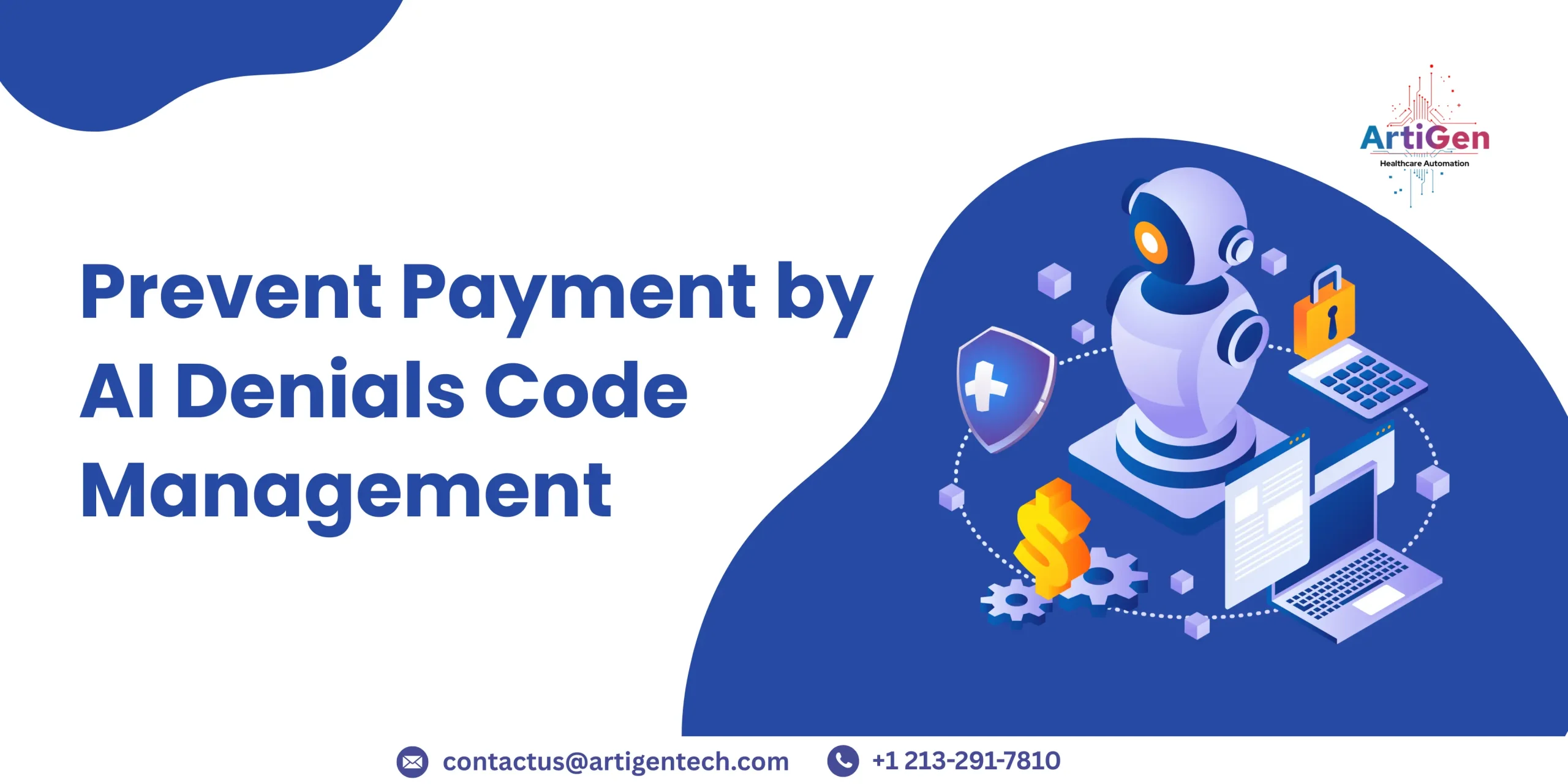
To effectively curb revenue leakage, healthcare providers and billing organizations need to go beyond simply appealing denials after the fact. They should embrace intelligent denial code management, leveraging automation and AI. This shift redefines denial management, moving it from a reactive, post-event process to a proactive strategy designed to safeguard revenue.
This blog post explores how denial management in healthcare can be improved. It focuses on intelligent denial code management, automation, and AI-driven workflows, all while ensuring compliance with medical coding standards and the demands of payers.
Understanding Payment Denials in Healthcare
A payment denial happens when a payer declines to pay a claim, either partially or completely. These denials are communicated using standardized denial codes in medical billing, primarily:
- CARCs (Claim Adjustment Reason Codes) – explain why the claim was denied
- RARCs (Remittance Advice Remark Codes) – provide additional context or instructions
Even though these codes are essential, they are often not used enough. Many organizations record denials but don’t evaluate them systematically. This leads to repeated mistakes, delayed payments, and unnecessary losses.
Why Denial Management Is a Critical RCM Function
Effective payment denial management directly impacts:
- Net revenue realization
- Days in Accounts Receivable (A/R)
- Cost to collect
- Compliance and audit risk
- Staff productivity
Traditional methods for claim denials management rely heavily on manual review, spreadsheets, and the knowledge of coders. This approach is becoming less effective because of the growing number of claims, the complexity of payer rules, and decreasing profit margins.
Therefore, denial management automation becomes is essential.
What Is Intelligent Denial Code Management?
Denial Code Management is a structured process that involves capturing, analyzing, categorizing, and resolving denial codes to prevent them from happening again. When technology is used, it becomes an intelligent denial management system.
Intelligent denial code management brings together several key elements:
- Advanced denial analytics
- AI-driven pattern recognition
- Automated claim scrubbing
- Predictive denial prevention
- Rule-based coding validation
Instead of asking “Why was this claim denied?”, intelligent systems ask:
“How do we prevent this denial from happening again?”
Common Causes of Claim Denials Identified Through Codes
Analyzing denial codes reveals common root causes, including:
1. Coding Errors
- Errors in CPT, ICD-10, Modifier or HCPCS coding.
- Medical necessity not established for payable diagnosis to the corresponding payers.
- Diagnosis-to-procedure connections are incomplete.
2. Documentation Deficiencies
- Missing provider signatures.
- Insufficient clinical detail.
- Lack of supporting notes.
3. Eligibility and Authorization Issues
- Inactive coverage.
- Missing prior authorization.
- Incorrect payer information.
4. Modifier Misuse
- Missing or incorrect modifiers
- Inconsistent use across payers
5. Timely Filing Violations
- Claims submitted beyond payer deadlines
Without structured denial code analysis, these issues persist across thousands of claims.
The Shift from Reactive to Proactive Denial Management
Many organizations continue to react to denials, dealing with them only after a payment is turned down. Intelligent healthcare denial management, however, takes a different approach, emphasizing prevention.
Reactive Denial Management
*Identification by manual denial review
* Prioritization on high appeal costs
* Delayed cash flow
* Appeals management on repeated errors
* Correction & resubmission
Proactive Denial Management
* Pre-bill validation & verification
* Data capture to enhance automated edits
* Predictive risk scoring
* Continuous improvement & ongoing education to coders
* Scrubbing software to arrest errors before submission of claims
Proactive strategies are the key to reducing claim denials on a large scale.
Role of Denial Management Software
Modern denial management software simplifies and automates the entire denial process. Its core functions are:
- Real-time tracking of denials
- Automated categorization of denials
- Mapping of CARC/RARC codes to the underlying reasons
- Workflow automation for appeals
- Performance dashboards
- Detection > Automation > Prevention
- Root cause identification
- Actionable insights (Indicators, flags, checkpoints)
More sophisticated claim denial management software takes things further, incorporating integrations with EHRs, coding systems, and RCM platforms.
How AI Transforms Denial Management
AI in denial management introduces intelligence that manual systems cannot match.
1. Predictive Denial Identification
Machine learning models sift through past claim data, pinpointing those most likely to be denied before they’re even filed.
2. Automated Claim Scrubbing
AI-driven rules engines check for:
- CPT with ICD-10 pairings
- Payer-specific coding stipulations
- Modifier prerequisites
- NCCI edits checker & LCD coverage before submission
- Denial patterns, coding errors & payer rules
3. Root Cause Analysis at Scale
AI groups denial codes to uncover widespread problems, analyzing data by:
- Provider
- Specialty
- Payer
- Location
- CPT, ICD-10 & Modifiers
4. Continuous Learning
AI systems get smarter by learning from:
- Successful appeals
- Coder input
- Shifts in payer practices
This intelligence forms the core of automated denial management.
Denial Prevention Strategies Enabled by Automation
Front-end controls are the key to effective denial prevention strategies; back-end fixes just don’t cut it.
Strategy 1: automated eligibility and authorization checks.
Real-time verification, ensuring coverage is spot-on before any services are provided.
Strategy 2: coding validation and compliance automation.
AI steps in to validate coding accuracy and compliance, all while keeping an eye on payer policies.
Strategy 3: standardized denial code interpretation.
Automated logic takes the guesswork out of interpreting those problematic denial codes.
Strategy 4: Specialty-specific denial rules are also a must.
High-risk specialties, in particular, see the most benefit from this tailored approach.
Strategy 5: pre-bill risk scoring.
Claims get scored for denial risk, which means proactive correction is possible.
Put together, these strategies create a solid denial prevention software framework.
Impact on Revenue Cycle Performance
Organizations that have adopted claims denial reduction software frequently see several benefits.
- Lower initial denial rates
- Faster reimbursement cycles
- Reduced appeal volumes
- Improved first-pass acceptance rates
- Lower administrative costs
Key KPIs to Monitor
- Denial rate (% of total claims)
- First-pass yield
- Days in A/R
- Appeal success rate
- Revenue recovered
Intelligent denial management directly strengthens payment denial management outcomes.
Compliance and Audit Risk Reduction
Payers and regulators are leaning more and more on analytics to spot irregularities. When denial management is handled poorly, the risks mount:
- Post-payment audits become more likely.
- Penalties can be extrapolated.
- Compliance violations are a real possibility.
Automating denial management offers several key benefits:
- Coding logic is applied consistently.
- Audit trails are defensible.
- Documentation aligns properly.
- The risk of audits is reduced.
- Increased efficiency & productivity
- Revenue & Financial enhancement
- Improved Compliance
Consequently, healthcare denial management is now a vital compliance function, not just a financial one.
Addressing Common Concerns about Automation
“Automation Will Replace Billing and Coding Staff”
In practice, automation improves human skills. Programmers can then focus on complex problems, audits, and quality control.
“AI Cannot Interpret Clinical Nuance”
Modern AI models are trained using a lot of clinical documents and are improved through ongoing feedback.
“Implementation Is Too Disruptive”
Most platforms integrate smoothly with existing electronic health record (EHR) and billing systems, which allows for a gradual implementation.
Best Practices for Implementing Intelligent Denial Management
- Start with Denial Analytics
Identify top denial codes, payers, and specialties. - Engage Coding and Billing Teams Early
Human expertise is critical for training and oversight. - Select Scalable Denial Management Software
Choose solutions that adapt to payer rule changes. - Automate High-Volume Denial Categories
Focus first on denials with the greatest revenue impact. - Continuously Measure and Optimize
Use KPIs to refine workflows and AI models.
The Future of Denial Management in Healthcare
As the healthcare landscape shifts, denial management will transform.
- It will be immediate, not something that happens after the fact.
- It will anticipate problems, rather than just respond to them.
- It will be integrated into clinical documentation.
- And it will be powered by AI, with a strong focus on compliance.
Those who simplify denial management automation will have a clear advantage over those who stick with manual methods.
Conclusion: Turning Denials into a Revenue Protection Strategy
Reducing payment denials isn’t just about putting in more effort anymore; it’s about being more strategic. Intelligent Denial Code Management, powered by AI and automation, transforms denial management into a proactive, revenue-boosting operation.
Healthcare organizations that implement sophisticated claim denial management software can expect to see:
- Fewer claim denials
- Improved cash flow
- Stronger compliance
- Greater operational efficiency
In a landscape of increased oversight and tighter profit margins, intelligent denial management isn’t a luxury; it’s a necessity for maintaining a healthy revenue cycle.