
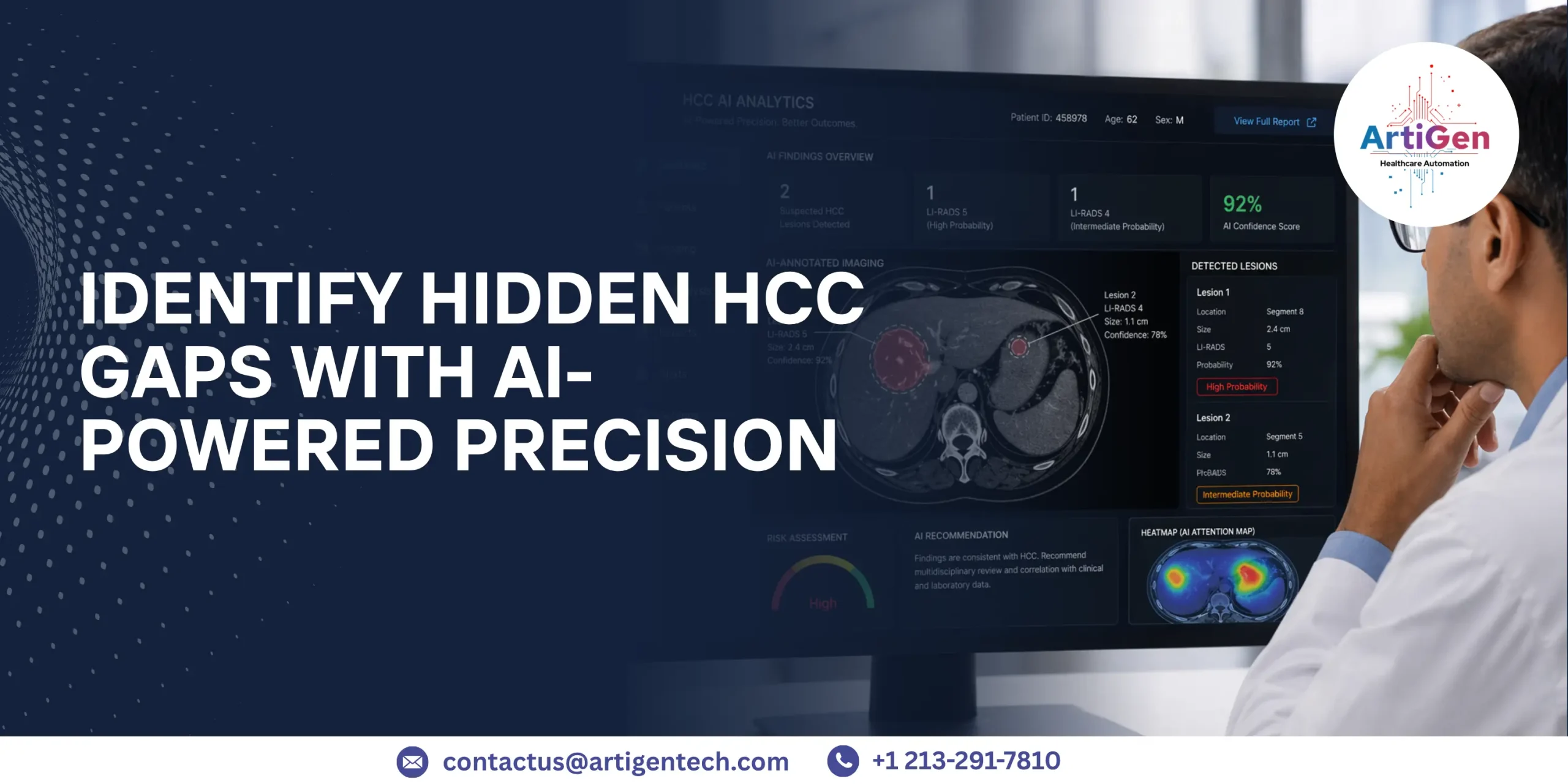
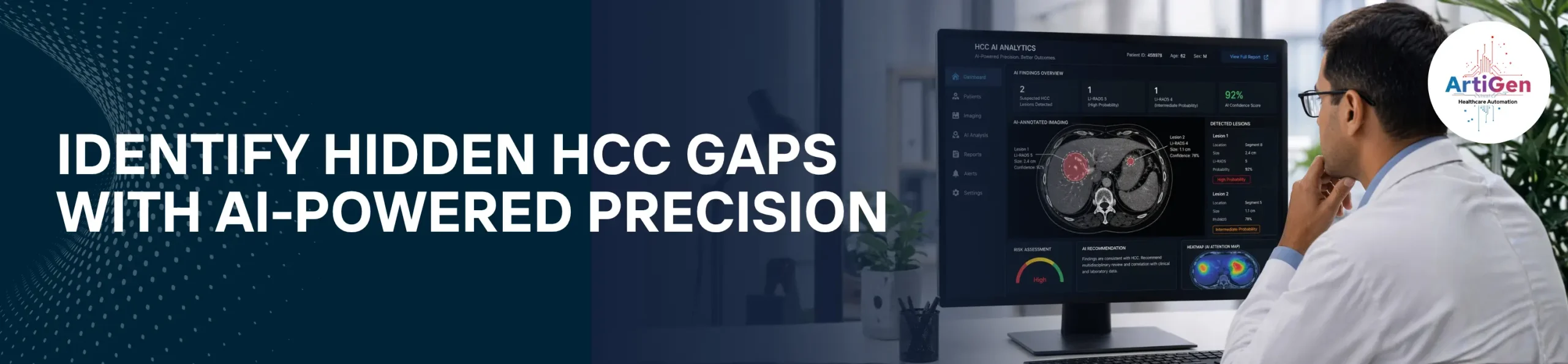
How AI Identifies HCC Gaps in Patient Risk Profiles
Introduction: The Growing Importance of Accurate Risk Adjustment
In today’s value-based healthcare ecosystem, accurate risk adjustment coding is no longer optional—it is essential. As healthcare systems shift from fee-for-service to outcome-based reimbursement models, the ability to capture a patient’s true clinical complexity directly impacts financial performance, care quality, and compliance.
This is where HCC medical coding automating is very important. Hierarchical Condition Category (HCC) models are used to figure out how risky a patient is and how much to pay based on their medical history. But even with structured frameworks and HCC coding guidelines, many healthcare organizations have trouble with incomplete documentation, missed diagnoses, and inefficient coding.
The first step is to comprehend what is HCC coding and how it fits into the bigger picture. HCC coding is basically the process of linking patient diagnoses to standard HCC diagnosis codes, which are then used to figure out Risk Adjustment Factor (RAF) scores. These scores affect how much money is paid out under value-based care programs like Medicare Advantage.
The problem? Traditional manual processes can’t handle the amount and complexity of modern healthcare data.
AI-driven HCC coding automation is changing the way companies deal with HCC risk adjustment in this area.
HCC gap analysis is very important for finding conditions that are missing or not documented that affect patient risk profiles and the accuracy of payments. Healthcare organizations can move from reactive coding to proactive risk adjustment strategies with the help of AI-driven insights.
What is HCC Coding and Why It Matters?
Before diving into automation, it’s important to establish a clear understanding of what is HCC coding.
HCC coding is a risk adjustment methodology used to assign risk scores to patients based on their documented health conditions. Each condition is mapped to specific HCC diagnosis codes, which reflect disease severity and expected healthcare costs.
How Risk Adjustment Coding Works
To understand how risk adjustment coding works, consider the following workflow:
- Patient encounters generate clinical documentation
- Diagnoses are extracted and coded using ICD-10
- Codes are mapped to HCC categories
- Each HCC contributes to a RAF score
- RAF score determines reimbursement
The accuracy of this process depends entirely on documentation quality and coding precision.
Even small gaps in documentation can lead to:
- Underreported patient risk
- Reduced reimbursement
- Compliance issues
- Missed care opportunities
This is why HCC coding in healthcare requires both clinical understanding and technical precision.
The Problem: Hidden HCC Gaps in Patient Profiles
One of the biggest challenges in HCC medical coding automation is identifying “gaps”—conditions that exist but are not properly documented or coded.
These gaps occur due to:
- Incomplete clinical documentation
- Time constraints for physicians
- Lack of real-time coding support
- Manual review limitations
- Fragmented healthcare data systems
What is HCC Gap Analysis?
HCC gap analysis refers to the process of identifying missing, undercoded, or undocumented conditions that should be included in a patient’s risk profile.
Without effective HCC gap analysis, organizations face:
- Revenue leakage
- Lower RAF scores
- Increased audit risk
- Poor population health insights
Traditional methods rely heavily on retrospective chart reviews, which are time-consuming and often reactive rather than proactive.
How AI is Transforming HCC Coding in Healthcare
Artificial Intelligence is revolutionizing HCC coding in healthcare by introducing speed, accuracy, and predictive intelligence into the process.
AI-powered systems leverage:
- Natural Language Processing (NLP)
- Machine Learning (ML)
- Predictive Analytics
- Data Integration across systems
These technologies enable healthcare organizations to move from manual coding to intelligent HCC coding automation.
1. AI-Powered Data Extraction from Clinical Documentation
One of the biggest advantages of AI is its ability to process unstructured data.
Clinical notes, discharge summaries, lab reports, and imaging results contain valuable insights that are often missed in manual workflows.
AI uses NLP to:
- Extract relevant diagnoses from physician notes
- Identify chronic conditions mentioned but not coded
- Map extracted data to appropriate HCC diagnosis codes
This ensures that no clinically relevant information is overlooked.
2. Intelligent HCC Gap Identification
AI-driven systems perform real-time HCC gap analysis by comparing:
- Current patient data
- Historical records
- Treatment patterns
- Medication usage
These systems can “suspect” missing conditions based on patterns.
For example:
- A patient on insulin with no diabetes code
- Repeated lab results indicating chronic kidney disease
- Medications suggesting unmanaged chronic conditions
AI flags these as potential gaps, enabling coders to review and validate.
This significantly enhances HCC coding best practices by ensuring completeness and accuracy.
3. Retrospective and Prospective Coding Optimization
AI operates across two critical dimensions:
Retrospective Coding
- Reviews historical patient data
- Identifies missed or undercoded conditions
- Improves accuracy of past claims
Prospective Coding
- Provides real-time coding suggestions during patient encounters
- Ensures accurate documentation at the point of care
- Reduces future coding gaps
This dual approach strengthens overall HCC risk adjustment and improves financial outcomes.
4. Chronic Condition Recapture and Monitoring
Many HCC conditions must be documented annually.
AI systems continuously monitor:
- Chronic disease progression
- Previous diagnoses
- Ongoing treatments
They identify recapture opportunities where conditions were previously coded but not documented in the current year.
This ensures:
- Consistent RAF scores
- Accurate patient risk profiles
- Better care continuity
5. Predictive Risk Stratification
Beyond identifying gaps, AI enhances risk adjustment coding through predictive analytics.
AI models:
- Forecast patient risk levels
- Prioritize high-value charts for review
- Identify patients requiring immediate intervention
This proactive approach improves both clinical outcomes and financial performance.
The Role of Automation in HCC Medical Coding Services
Modern HCC Medical coding services are increasingly powered by automation.
Traditional workflows involve:
- Manual chart review
- Delayed coding processes
- High dependency on human intervention
In contrast, AI-driven risk adjustment solutions offer:
- Real-time insights
- Automated workflows
- Scalable operations
- Higher coding accuracy
This shift is transforming how healthcare organizations approach healthcare coding solutions.
ArtigenTech’s Approach to HCC Coding Automation
At ArtigenTech, we recognize that accurate HCC risk adjustment requires more than just technology—it requires intelligent workflow integration.
Our approach to HCC coding automation focuses on:
End-to-End Automation
From data ingestion to code validation, automation is embedded across the entire coding lifecycle.
AI-Driven Insights
Advanced models analyze structured and unstructured data to identify coding gaps with precision.
Real-Time Coding Support
Clinicians and coders receive contextual suggestions during documentation, reducing errors at the source.
Scalable Risk Adjustment Solutions
Our systems are designed to handle high-volume data while maintaining compliance and accuracy.
Compliance and Audit Readiness
Built-in validation ensures adherence to HCC coding guidelines and reduces audit risks.
By combining AI with workflow intelligence, ArtigenTech enables healthcare organizations to adopt HCC coding best practices at scale.
Benefits of AI-Driven HCC Coding
Implementing AI-powered risk adjustment coding software delivers measurable outcomes:
- Improved Coding Accuracy
AI minimizes undercoding and overcoding by ensuring all relevant conditions are captured.
- Enhanced Revenue Integrity
Accurate RAF scores lead to appropriate reimbursement.
- Reduced Administrative Burden
Automation eliminates repetitive manual tasks.
- Better Compliance
AI ensures adherence to evolving HCC coding guidelines.
- Faster Turnaround Time
Real-time processing accelerates coding workflows.
- Data-Driven Decision Making
Organizations gain deeper insights into patient populations.
Challenges in HCC Coding and How AI Overcomes Them
Despite its importance, HCC medical coding automation faces several challenges:
Data Fragmentation
AI integrates data from multiple systems into a unified view.
Documentation Gaps
NLP extracts meaningful insights from unstructured data.
Coding Complexity
AI simplifies mapping to HCC diagnosis codes.
Resource Constraints
Automation reduces dependency on manual effort.
Regulatory Compliance
AI systems are continuously updated to align with guidelines.
The Future of HCC Coding in Healthcare
The future of HCC coding in healthcare is driven by intelligent automation.
Key trends include:
- AI-powered real-time coding assistants
- Fully automated risk adjustment coding software
- Predictive RAF score modeling
- Integrated clinical and financial workflows
- Continuous learning systems
Healthcare organizations that adopt these technologies will gain a significant competitive advantage.
Conclusion: Closing the Gap with Intelligent Automation
Value-based care is based on correct HCC risk adjustment. But traditional coding methods are no longer good enough for today’s healthcare systems.
Healthcare providers can make sure that risk adjustment coding is complete and correct while also reducing revenue loss by using advanced HCC gap analysis. Automation powered by AI turns HCC gap analysis into a smart, ongoing process that leads to better clinical and financial results.
AI-driven HCC coding automation changes how businesses find gaps, make sure the information is correct, and get the most money back.
By leveraging advanced risk adjustment solutions, healthcare providers can:
- Eliminate coding inefficiencies
- Improve patient risk visibility
- Enhance financial performance
- Ensure compliance
ArtigenTech is leading the way in this change by providing smart healthcare coding solutions that connect clinical data with accurate coding.
Not only will healthcare be digital in the future, but it will also be smart, automated, and based on data.
And it starts with fixing the problems with HCC coding.

