How AI Validates Patient Registration Data before Urgent Care Coding
In today’s fast-paced healthcare environment, urgent care centers rely on speed without compromising accuracy. Every patient encounter begins with registration, and the quality of patient registration data collected during this step directly impacts the success of the entire urgent care coding workflow. Incorrect demographics, incomplete insurance information, duplicate records, or documentation errors can create billing delays, coding inaccuracies, and claim denials.
Traditionally, front-desk staff manually entered patient information, verified insurance details, and prepared documentation before coding teams reviewed the medical record. While effective, manual processes are time-consuming and prone to human error. AI medical coding and intelligent automation are changing the process today by validating patient information before the coding begins.
Advanced medical coding automation service delivers cleaner documentation, faster coding, stronger compliance and better reimbursement for healthcare organizations. Solutions like Artigen’s Quickodex AI help urgent care providers validate registration data, automate verification processes and streamline the workflow from patient intake to coding.
Why Patient Registration Is the Foundation of Accurate Urgent Care Coding
Accurate coding starts long before a medical coder reviews a patient chart. Every diagnosis code, CPT code, and billing decision depends on complete and reliable registration information.
The registration process captures critical details such as:
- Patient demographics
- Insurance information
- Provider details
- Visit reason
- Medical history
- Emergency contacts
- Consent forms
Incorrect or incomplete information impacts urgent care medical coding, urgent care billing, reimbursement timelines and overall operational efficiency.
High quality patient registration data gives coders confidence that the clinical documentation matches the patient’s identity, insurance coverage and visit details.
Common Registration Challenges in Urgent Care
Urgent care facilities often experience high patient volumes, increasing the likelihood of registration errors.
Some of the most common issues include:
- Duplicate patient records
- Incorrect demographic information
- Misspelled patient names
- Expired insurance details
- Missing policy numbers
- Incomplete consent documentation
- Incorrect payer selection
- Manual data entry errors
These issues create additional work for registration teams, coders and billing specialists and also delay reimbursement.
The AI-assisted validation greatly reduces these challenges even before coding begins.
How AI Validates Patient Registration Data
Modern medical coding software does much more than just assign diagnosis codes. Now AI checks the registration information at different checkpoints before starting the coding.
1. Patient Identity Verification
One of the first validation steps is patient identity verification.
AI compares information from:
- Government-issued identification
- Insurance cards
- Existing patient records
- Previous visit history
- Electronic signatures
AI can identify duplicate or inconsistent records, helping to ensure that the right patient information is associated with each encounter.
This help to reduce billing errors related to identity and increases patient safety.
2. Insurance Eligibility Verification
Insurance verification is another critical step before coding.
Using automated payer integrations, AI performs real-time insurance eligibility verification to check:
- Active coverage
- Policy status
- Copay requirements
- Deductibles
- Coverage limitations
- Referral requirements
This automated process removes the need for manual verification and minimizes claim rejections due to inactive or incorrect insurance information.
Proper patient eligibility verification also helps providers inform patients of their coverage prior to delivering services.
3. Electronic Health Records Validation
AI works hand-in-hand with Electronic Health Records (EHRs) to compare newly entered information to existing patient records.
By reviewing electronic health records, AI identifies:
- Missing demographics
- Inconsistent patient history
- Duplicate medical records
- Conflicting insurance information
- Previous diagnoses
- Existing allergies
This intelligent cross-check enhances the quality of documentation and facilitates accurate coding.
4. Patient Data Validation
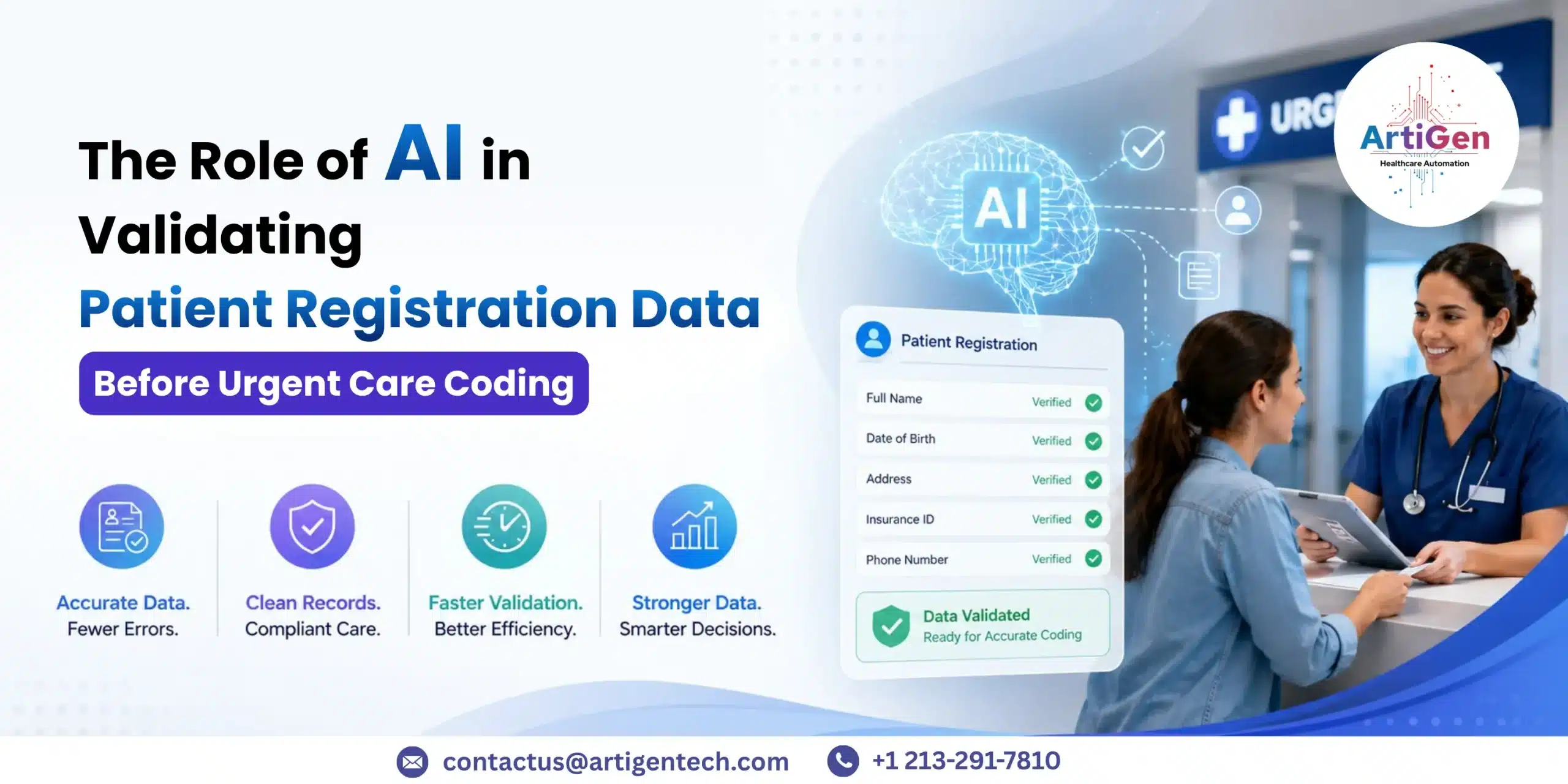
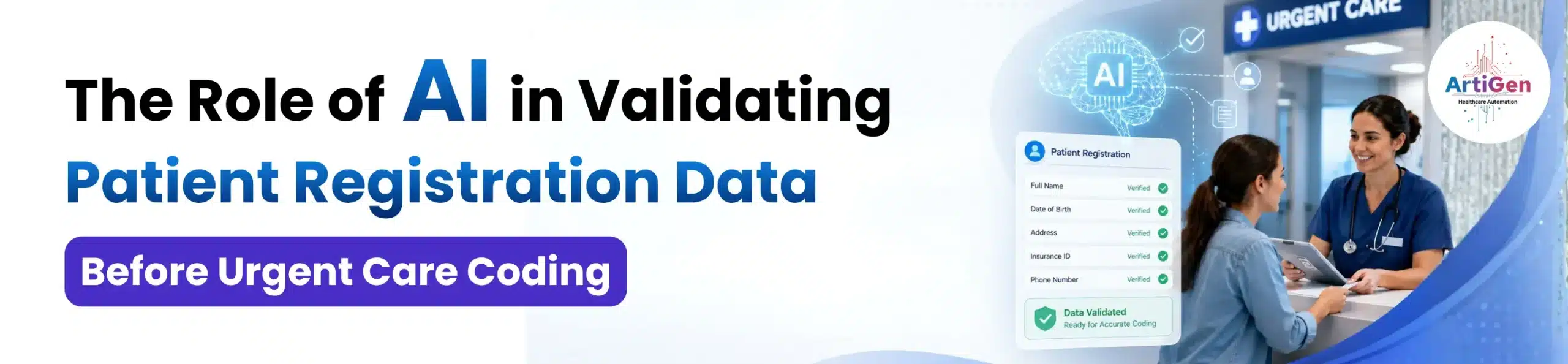
Comprehensive patient data validation ensures the required registration fields for all encounters are filled out before coding begins.
AI automatically flags:
- Missing addresses
- Invalid phone numbers
- Incorrect dates of birth
- Duplicate medical record numbers
- Incomplete insurance fields
- Missing consent forms
Registration staff receive real-time alerts, allowing corrections before the patient’s chart reaches coding teams.
The Role of Patient Intake Automation
Today’s healthcare organizations increasingly rely on patient intake automation to reduce manual administrative work.
Digital registration platforms allow patients to:
- Complete forms online
- Upload insurance cards
- Verify personal information
- Submit identification
- Sign electronic consent forms
AI can validate submitted information when paired with automated patient registration, reducing front-desk work and improving accuracy.
Patients also benefit from shorter waiting times and a more streamlined registration process.
Preparing Documentation for Accurate Coding
Once registration is validated, AI helps organize urgent care documentation before coding begins.
The system verifies that required documents include:
- Provider notes
- Patient history
- Insurance information
- Consent documentation
- Visit reason
- Clinical observations
Accurate medical coding documentation allows to correctly assign the diagnosis and procedure codes and decreases clarification requests.
This structured documentation also improves audit readiness.
Supporting the Urgent Care Coding Workflow
Validated registration information improves every stage of the urgent care coding workflow.
AI helps coding teams by:
- Confirming patient demographics
- Matching insurance information
- Validating provider details
- Organizing clinical documentation
- Identifying missing records
- Reducing duplicate charts
As a result, coders spend time correcting administrative issues and more time focusing on proper coding.
This simplified process leads to better overall urgent care coding automation.
Benefits of Medical Coding Automation
Healthcare organizations that have deployed medical coding have realized measurable gains across their revenue cycle operations.
Key benefits include:
- Faster coding turnaround
- Reduced administrative workload
- Improved coding accuracy
- Fewer claim denials
- Better documentation quality
- Increased staff productivity
- Enhanced patient satisfaction
Combined with automated medical coding, minimizes manual repetitive tasks while enabling faster reimbursement.
Strengthening Medical Coding Compliance
Accurate registration is also essential for maintaining medical coding compliance.
Incomplete patient information often leads to:
- Coding inconsistencies
- Incorrect payer selection
- Documentation gaps
- Claim denials
- Regulatory risks
AI constantly validates required fields ensures documentation is consistent with payer requirements and organizational policies.
This proactive approach helps ensure long-term compliance and minimizes financial risk.
Improving Medical Billing Automation
Validated registration data creates a stronger foundation for medical billing automation.
When patient information is verified before coding:
- Claims contain fewer errors.
- Insurance information is accurate.
- Billing teams spend less time correcting rejected claims.
- Reimbursement cycles become faster.
- Administrative costs decrease.
This allows healthcare organizations to improve operational efficiency while maintaining a positive patient experience.
Medical Coding Audit Readiness Starts at Registration
Preparing for a medical coding audit begins with accurate documentation—not after coding is complete.
AI strengthens audit readiness by ensuring:
- Registration information is complete.
- Identity verification is documented.
- Insurance verification is recorded.
- Clinical documentation is linked correctly.
- Coding records remain traceable.
Complete documentation supports transparency and simplifies internal and external audits.
How Quickodex AI by Artigen Transforms Registration Validation
Artigen’s Quickodex AI advances automation in coding by validating registration data before the coding process begins.
The platform intelligently reviews patient registration data, performs patient identity verification, automates insurance eligibility verification, validates patient eligibility verification, and seamlessly integrates with electronic health records.
Quickodex AI also streamlines urgent care documentation, improves medical coding documentation, helps with medical coding compliance, and speeds up urgent care coding automation.
Quickodex AI combines intelligent validation with medical coding software to reduce administrative burden while helping healthcare organizations improve coding accuracy, streamline urgent care billing, and optimize revenue cycle performance.
Conclusion
Successful urgent care encounters begin with patient registration. Validating patient registration data is the process of ensuring patient identities, insurance information, and clinical documentation are complete, consistent, and ready for coding.
With AI medical coding, medical coding automation, and intelligent validation technologies, healthcare organizations can reduce administrative errors, improve medical coding compliance, improve urgent care billing, and develop a more efficient urgent care coding workflow.
Quickodex AI by Artigen allows providers to automate patient registration verification, integrate with Electronic Health Records, automate patient registration, enhance medical billing automation and improve urgent care medical coding accuracy. Urgent care centers are focused on speed, accuracy, and patient satisfaction, making AI-driven registration validation an important first step to a smarter, more resilient revenue cycle.
Frequently Asked Questions
What is patient registration data in urgent care?
Patient registration data includes demographic details, insurance information, identification records, consent forms, and visit-related information collected before treatment.
Why is patient identity verification important?
It prevents duplicate records, reduces billing errors, improves patient safety, and ensures the correct medical record is used throughout the care journey.
How does AI validate insurance eligibility?
AI connects with payer systems in real time to verify active coverage, benefits, deductibles, referrals, and policy information before services are billed.
How do Electronic Health Records support coding?
Electronic Health Records provide clinical history, demographics, and visit information that AI validates before coding, improving documentation accuracy and reducing coding errors.
What are the benefits of medical coding automation?
Medical coding automation improves coding speed, reduces manual work, enhances documentation quality, supports compliance, minimizes denials, and accelerates reimbursement.
How does Quickodex AI improve urgent care coding?
Quickodex AI validates patient registration data, automates verification workflows, supports documentation accuracy, integrates with EHR systems, and streamlines urgent care coding automation for faster and more compliant coding.