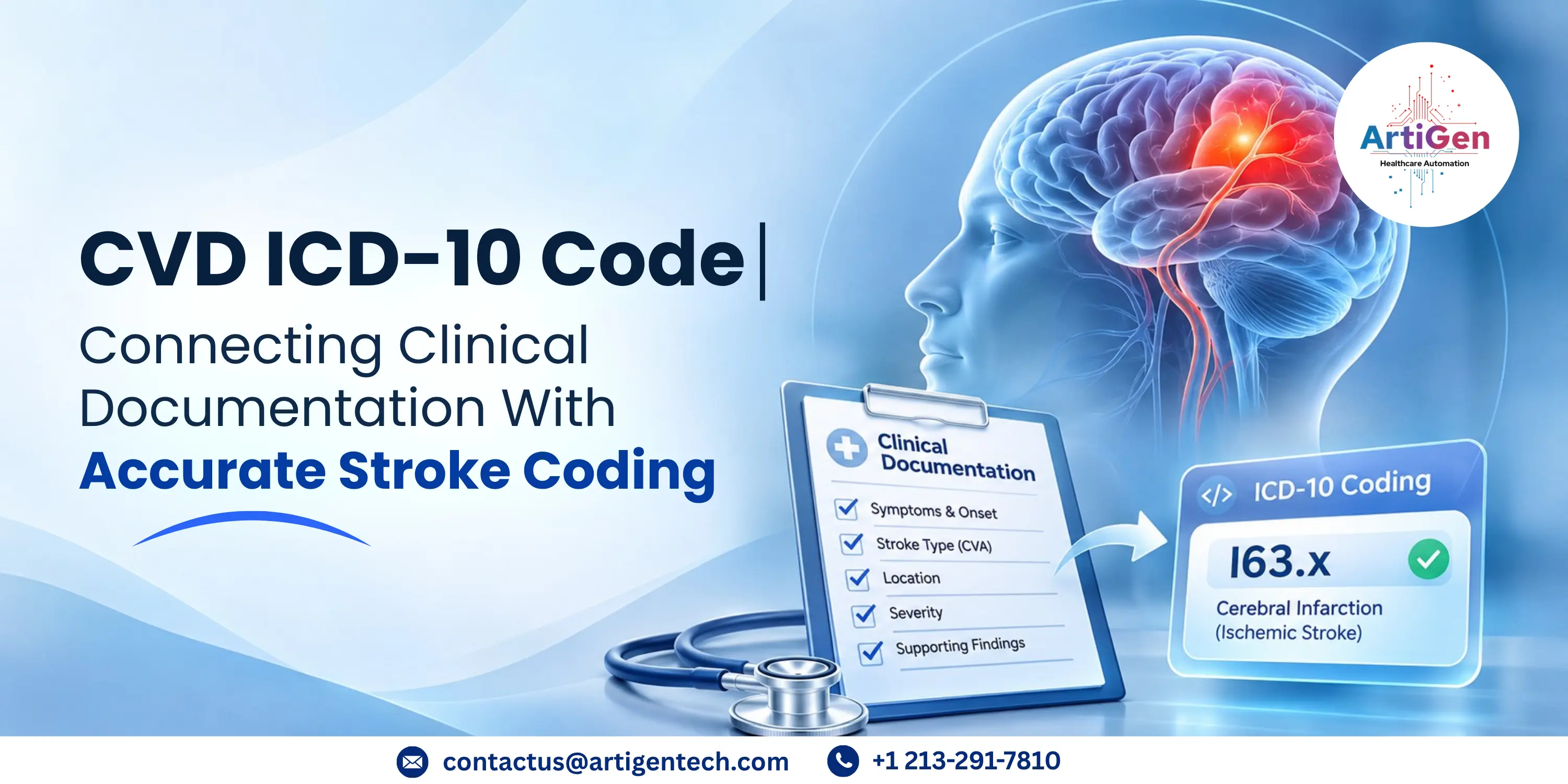
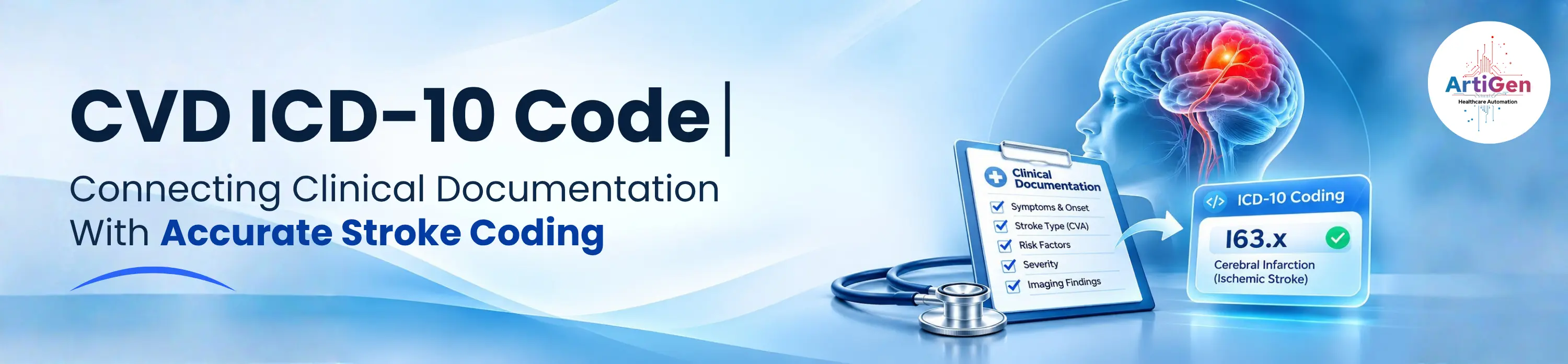
The Evolving Role of Clinical Documentation in Stroke Coding
Stroke care is becoming increasingly complex, and the quality of clinical documentation now plays a central role in how accurately that care is represented through ICD-10-CM coding. From distinguishing ischemic and hemorrhagic events to documenting neurological deficits and residual conditions, every stage of the patient’s record can influence coding accuracy.
For healthcare organizations, accurate stroke coding depends on more than identifying that a patient experienced a stroke. The medical record must communicate the type of stroke, clinical findings, affected area when established, acuity, associated conditions, and relationship between the diagnosis and documented deficits.
This is why stroke coding and documentation is becoming an increasingly important focus for coding teams, CDI specialists, physicians, and healthcare organizations.
Why Clinical Documentation Is Changing Stroke Coding
Historically, stroke coding often centered on identifying the diagnosis and assigning the appropriate ICD-10-CM category. Today, the process requires a much closer connection between clinical findings and coding requirements.
A provider may initially document a patient with suspected CVA, while subsequent imaging and neurological evaluation establish a more specific diagnosis. If the final documentation does not clearly reflect that diagnosis, the coding record may not capture the full clinical picture.
For this reason, CVA documentation requirements have become an important part of documentation education and CDI programs. Clear provider documentation helps coding professionals distinguish between an active cerebrovascular event, a previous stroke, and residual effects.
The same principle applies when determining a cva ICD-10 code. A generic reference to CVA may not communicate the clinical specificity available elsewhere in the medical record.
Strong clinical documentation stroke coding practices help bridge this gap by connecting the provider’s diagnostic statement with supporting clinical evidence.
Understanding Stroke Documentation Requirements
The foundation of stroke documentation requirements is clear and clinically supported diagnostic language.
When a provider establishes a stroke diagnosis, documentation should communicate the condition as specifically as the clinical circumstances allow. The record may need to distinguish ischemic stroke from hemorrhagic stroke and identify relevant clinical details that support the diagnosis.
These documentation requirements for stroke coding help coding professionals determine the appropriate ICD-10-CM category without relying on assumptions.
For example, a patient may initially present with weakness and speech difficulty. A CT or MRI may then provide additional information, and the physician may establish cerebral infarction as the final diagnosis. The final documentation should reflect that clinical conclusion.
This progression is particularly important for stroke diagnosis documentation because the initial symptoms alone do not necessarily establish the final diagnosis.
Clear stroke clinical documentation also supports communication between physicians, CDI professionals, coders, and other members of the healthcare team.
Ischemic Stroke Documentation and Coding
Ischemic stroke represents one of the most common areas of stroke coding review. The condition occurs when blood flow to part of the brain is interrupted, resulting in cerebral infarction.
When reviewing an ischemic stroke ICD-10 case, coding professionals depend on provider documentation to establish the diagnosis and relevant clinical details.
The ischemic stroke documentation should clearly identify the established diagnosis and provide supporting clinical information when available. Documentation may include findings from neurological examinations, diagnostic imaging, and other clinical assessments.
When searching for an ischemic stroke ICD-10 classification, coding teams must evaluate the documented diagnosis rather than independently interpreting clinical findings.
This distinction is important for accurate stroke coding. Imaging findings can provide important clinical evidence, but the final coded diagnosis must be supported by appropriate provider documentation.
The terminology used in the record can therefore have a direct impact on stroke coding accuracy.
Why the Stroke ICD-10 Code Depends on Documentation
A stroke ICD-10 code is not determined simply by the presence of stroke-like symptoms. The documentation must establish what condition the patient actually experienced.
The same principle applies when determining a cva ICD-10 code. The clinical record should provide enough information to distinguish the patient’s condition from other cerebrovascular diagnoses.
For coding teams, this makes stroke coding guidelines closely connected to documentation quality. The coding professional needs a clear diagnostic statement that is supported by the clinical record.
When the provider documents only “CVA” without additional specificity, the record may require further review depending on the circumstances. By contrast, clear documentation of an established ischemic or hemorrhagic event provides a stronger foundation for code assignment.
This is one reason CVA coding guidelines and stroke documentation guidelines are increasingly incorporated into physician education and CDI programs.
Hemorrhagic Stroke Documentation Requires Specificity
Hemorrhagic stroke introduces a different documentation challenge because intracranial bleeding can occur in different locations and under different clinical circumstances.
When reviewing a hemorrhagic stroke ICD-10 case, coding professionals need documentation that establishes the type of hemorrhagic event.
Strong hemorrhagic stroke documentation can help differentiate the documented hemorrhage from other cerebrovascular conditions and provide the information necessary for accurate classification.
For example, documentation may identify a nontraumatic intracerebral hemorrhage or another specific type of intracranial hemorrhage. The clinical terminology should reflect the provider’s established diagnosis.
The relationship between imaging and diagnosis is also important. Imaging may identify bleeding, but hemorrhagic stroke documentation should clearly communicate the provider’s diagnostic interpretation.
This supports stroke coding accuracy and reduces ambiguity when determining the appropriate stroke ICD-10 code.
Acute Stroke versus Historical Stroke
Another important aspect of stroke coding and documentation is distinguishing an acute event from a patient’s history of stroke.
A patient may have a previous cerebrovascular event but present for care related to another condition. In other cases, the patient may be experiencing a new acute stroke while also having a history of previous cerebrovascular disease.
This makes CVA documentation requirements particularly important.
Documentation should make the clinical status clear so that coding professionals can determine whether the stroke represents an active condition, a previous event, or a residual effect.
The distinction is also relevant when reviewing a cva ICD-10 code for an encounter involving a patient with previous stroke history.
Clear stroke documentation requirements help prevent historical conditions from being confused with active diagnoses.
For accurate stroke coding, the documentation should reflect the patient’s current clinical situation rather than simply carrying forward diagnoses from previous encounters.
The Role of CDI in Stroke Coding
Clinical Documentation Improvement has become an important component of modern healthcare coding operations.
A strong clinical documentation improvement stroke program brings clinical teams, CDI specialists, and coding professionals together to identify documentation gaps that may affect the accuracy and completeness of the coded record.
The purpose of clinical documentation improvement stroke initiatives is not to change a diagnosis. Instead, the focus is on ensuring that the medical record clearly reflects the patient’s actual clinical condition.
In a stroke CDI workflow, specialists may review documentation for diagnosis specificity, acuity, neurological deficits, complications, and relationships between conditions.
This makes CDI stroke coding an important connection between clinical care and administrative classification.
When implemented effectively, stroke CDI can help organizations identify documentation opportunities earlier in the patient journey.
How CDI Supports Stroke Documentation
A comprehensive clinical documentation improvement stroke process can review the medical record across multiple stages of care.
For example, CDI professionals may evaluate:
- Initial physician documentation
- Neurological examination findings
- CT and MRI findings
- Stroke type
- Documented neurological deficits
- Treatment and clinical progression
- Complications
- Discharge diagnosis
- Residual conditions
This broader review strengthens stroke clinical documentation and provides coding teams with more complete information.
It also supports clinical documentation stroke coding by helping identify inconsistencies between different parts of the medical record.
For example, if progress notes describe an ischemic event while the final documentation only states “CVA,” the discrepancy may require review.
Similarly, if a patient has persistent weakness following a stroke, clear documentation linking the deficit to the previous stroke can be important for subsequent coding.
Documenting Neurological Deficits
Stroke documentation does not end with identifying the underlying cerebrovascular event. Neurological deficits can also be clinically important.
Depending on the patient’s condition, documentation may describe:
- Hemiplegia
- Hemiparesis
- Aphasia
- Dysphagia
- Speech impairment
- Visual impairment
- Cognitive impairment
- Other neurological deficits
For accurate stroke coding, the medical record should clearly establish clinically relevant relationships between the stroke and documented deficits when appropriate.
This is another area where stroke diagnosis documentation can influence coding quality.
For example, simply documenting weakness may provide less information than documenting the specific neurological deficit and its established relationship to the stroke.
Clear stroke clinical documentation therefore gives CDI and coding teams a stronger foundation for determining the appropriate classifications.
The Importance of Stroke Documentation Guidelines
As healthcare organizations manage larger volumes of clinical records, consistent stroke documentation guidelines are becoming increasingly important.
These guidelines can help physicians and CDI teams understand the documentation elements that support accurate coding.
Effective stroke documentation guidelines may address:
- Stroke type
- Acuity
- Location
- Clinical findings
- Neurological deficits
- Complications
- Residual effects
- Cause-and-effect relationships
- Final diagnostic statements
Following consistent stroke coding guidelines can reduce ambiguity and improve communication between clinical and coding teams.
At the same time, CVA coding guidelines should be applied alongside provider documentation and the applicable ICD-10-CM requirements.
The objective is not to make documentation unnecessarily complicated. It is to ensure that the record accurately communicates the patient’s condition.
Common Stroke Documentation Gaps
Several documentation issues can make stroke coding accuracy more difficult.
One common issue is the use of broad terminology without a more specific final diagnosis. Another is inconsistent terminology between progress notes, imaging documentation, and discharge summaries.
Other potential gaps include:
- Unclear distinction between acute and historical stroke
- Incomplete documentation of neurological deficits
- Lack of clear cause-and-effect relationships
- Inconsistent documentation of stroke type
- Missing clarification of complications
- Insufficient final diagnostic specificity
These gaps can affect stroke coding and documentation workflows and may create unnecessary clarification requests.
Improving stroke documentation requirements awareness among physicians can help reduce these challenges.
Technology and the Future of Stroke CDI
Technology is also changing how healthcare organizations approach clinical documentation improvement stroke workflows.
Modern AI and computer-assisted coding technologies can analyze large volumes of clinical text and identify terminology related to diagnoses, procedures, symptoms, and clinical findings.
For CDI stroke coding, these technologies can help surface potentially relevant information from physician notes, discharge summaries, imaging reports, and other documentation.
For example, an AI-assisted system may identify references to cerebral infarction, neurological deficits, or hemorrhagic events and bring those concepts to the attention of a qualified professional.
The technology does not replace physician judgment or professional coding review. Instead, it can help make stroke CDI workflows more efficient by directing attention toward documentation that may require additional review.
This is especially valuable in high-volume environments where manual review of every clinical detail can consume significant time.
AI-Assisted Clinical Documentation and Coding
The evolution toward AI-supported workflows is also influencing clinical documentation stroke coding.
Natural language processing can identify relevant terminology from unstructured medical records, while clinical language understanding can help organize information around diagnoses and clinical events.
For stroke coding accuracy, the value of these technologies comes from their ability to connect information that may be distributed across multiple parts of the chart.
For example, an imaging report may describe an infarct, a neurologist may document the clinical diagnosis, and the discharge summary may describe residual deficits. Bringing these elements together can support a more complete documentation review.
However, AI should remain a supporting technology. Accurate stroke coding still depends on appropriate provider documentation, applicable coding rules, and professional validation.
Building a More Connected Stroke Coding Workflow
The future of stroke coding and documentation is moving toward a connected workflow that brings physicians, CDI specialists, coders, and technology together.
A strong workflow begins with stroke clinical documentation that clearly describes the patient’s condition.
It continues through clinical documentation improvement stroke processes that identify potential gaps.
It then moves into CDI stroke coding and professional coding review before the information reaches claims, reporting, analytics, and reimbursement workflows.
This connected approach can improve stroke coding accuracy while reducing unnecessary ambiguity.
For healthcare organizations, the objective is straightforward: ensure that the final coded record accurately represents the care documented in the patient’s medical record.
What Healthcare Organizations Should Focus On
As stroke care and healthcare coding continue to evolve, organizations can strengthen their workflows by focusing on several areas.
1. Improve Physician Documentation Education
Physicians should understand how specific diagnostic language influences coding. Education around CVA documentation requirements can help provider’s document stroke conditions more clearly.
2. Strengthen CDI Collaboration
A collaborative stroke CDI process can connect physicians, CDI specialists, and coding teams earlier in the documentation lifecycle.
3. Standardize Documentation Expectations
Consistent documentation requirements for stroke coding can help reduce variation between providers and departments.
4. Use Technology Strategically
AI-assisted tools can support clinical documentation stroke coding by identifying potentially important information across large clinical records.
5. Monitor Coding Quality
Organizations should regularly evaluate stroke coding accuracy to identify recurring documentation gaps and opportunities for education.
The Evolving Role of Documentation in Stroke Coding
The role of documentation in stroke coding is moving beyond simply supporting a diagnosis. It is becoming an important part of the broader clinical, coding, CDI, and revenue cycle workflow.
Whether the record involves an ischemic stroke ICD-10 classification, a hemorrhagic stroke ICD-10 classification, or another cerebrovascular condition, the quality of provider documentation determines how effectively the clinical story can be translated into the coded record.
A precise stroke ICD-10 code begins with precise clinical documentation.
Likewise, selecting an appropriate cva ICD-10 code requires the medical record to clearly communicate the patient’s established condition.
As healthcare organizations adopt more sophisticated CDI programs and AI-assisted workflows, stroke coding guidelines, CVA coding guidelines, and documentation standards will continue to work together.
The future of accurate stroke coding will therefore depend on a simple but important principle: better clinical documentation creates a stronger foundation for better coding.
Key Takeaway
The evolving role of stroke clinical documentation reflects a broader shift in healthcare toward connected clinical and administrative workflows. Clear stroke diagnosis documentation, consistent stroke documentation guidelines, and effective CDI processes can help coding teams represent complex stroke cases more accurately.
For healthcare organizations, improving stroke coding and documentation is not only about finding the right code. It is about ensuring that the medical record tells a complete, clinically supported story.
With stronger clinical documentation improvement stroke programs, structured stroke CDI workflows, and responsible use of AI-assisted technologies, organizations can create a more efficient path from clinical documentation to coding.
Ultimately, stroke documentation requirements, documentation requirements for stroke coding, and professional coding standards work together to support reliable healthcare data, cleaner workflows, and improved stroke coding accuracy.