The Rise of AI-Enabled Teleradiology and Smarter Claims Management
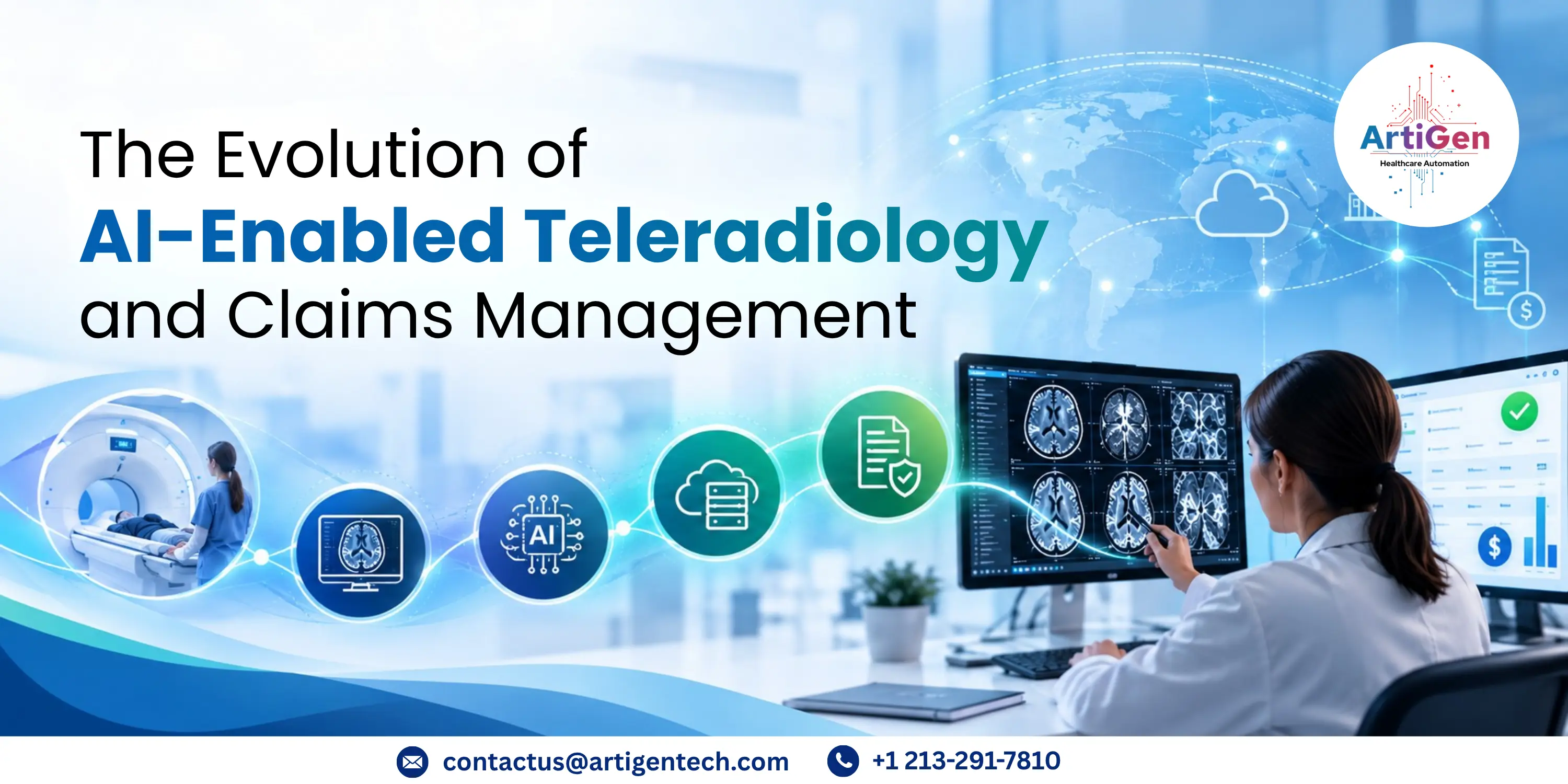
Radiology is becoming increasingly connected, remote, and data-driven. As imaging volumes grow and healthcare organizations face pressure to deliver faster reporting, the challenge is no longer limited to interpreting images. Radiology teams must also manage documentation, coding, billing, claims, payer requirements, and reimbursement with greater accuracy.
This is where AI-powered teleradiology is becoming an important part of the modern radiology ecosystem. By connecting remote imaging workflows with intelligent automation, healthcare organizations can improve how studies move from image interpretation to coding, billing, and claims processing.
At the same time, AI claims management is changing how healthcare organizations identify documentation gaps, review claims, and address potential denials before they affect reimbursement.
For organizations managing large imaging volumes, the combination of AI in teleradiology solutions, AI radiology coding, and automated claims workflows can create a more connected operational model.
AI-Powered Teleradiology Is Reshaping Radiology Workflows
Traditional teleradiology already helps healthcare organizations connect imaging centers with remote radiologists. However, increasing study volumes, specialist shortages, after-hours coverage requirements, and turnaround-time expectations are creating additional pressure on radiology operations.
AI-powered teleradiology adds another layer of workflow support.
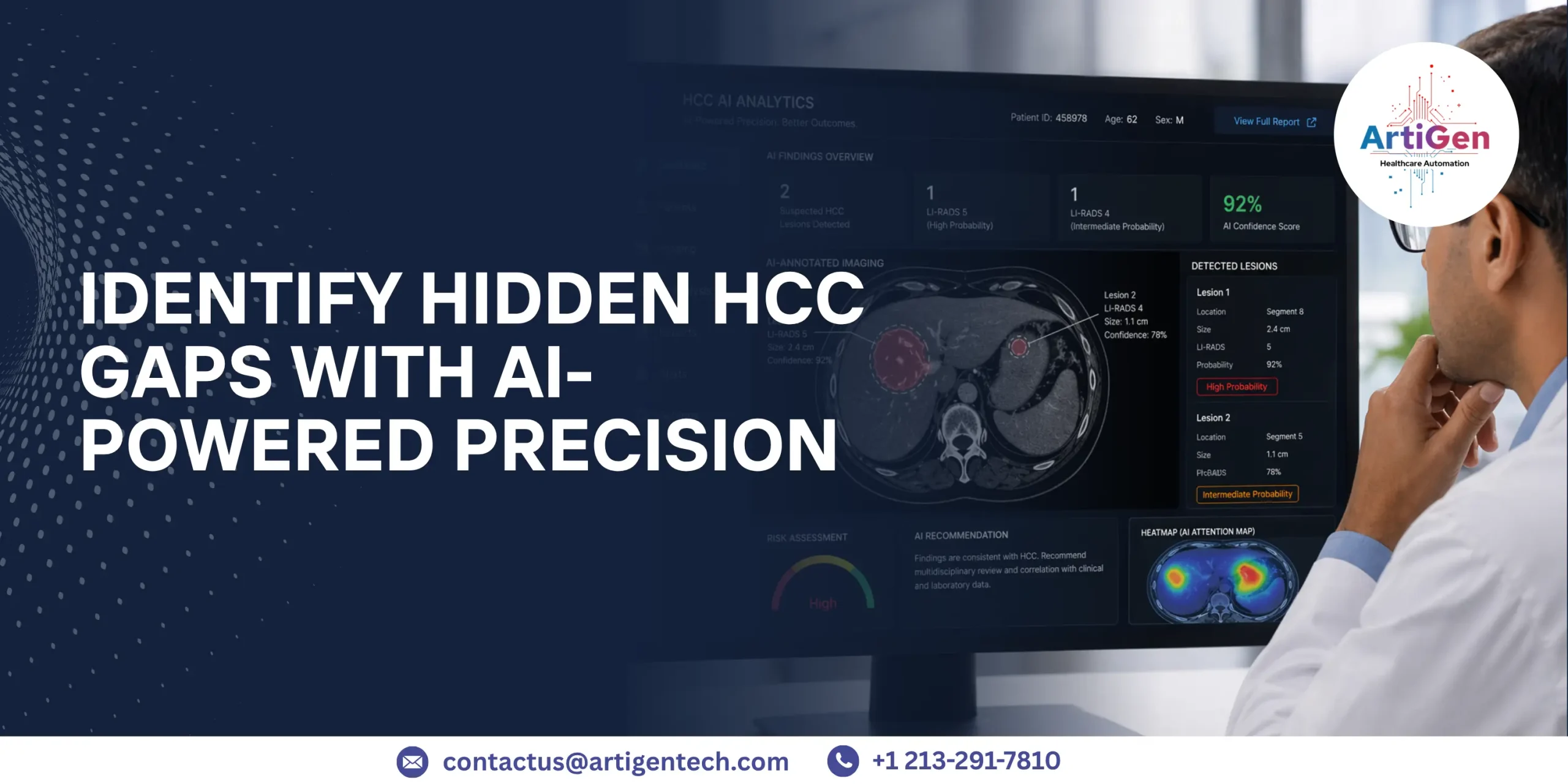
Modern AI in teleradiology solutions can assist with prioritizing critical studies, organizing imaging workloads, identifying relevant information within clinical documentation, and supporting radiologists during the reporting process.
For healthcare organizations using remote reading models, this can make teleradiology workflow automation particularly valuable. Instead of relying entirely on manual processes, AI can help organize information before it reaches the next stage of the workflow.
The goal is not to replace radiologists. The goal is to reduce repetitive administrative work and help clinical and revenue-cycle teams work with more structured information.
From Remote Imaging to Teleradiology Billing and Coding
A radiology examination does not end when the report is signed. The information generated during the imaging and reporting process eventually influences coding, billing, claims, and reimbursement.
This makes teleradiology billing and coding an important part of an efficient remote radiology model.
A common operational problem occurs when clinical documentation, radiology reports, and billing information are handled through disconnected workflows. Missing details, inconsistent documentation, coding errors, or delayed information can create downstream issues in teleradiology billing.
AI can help create a more connected workflow by organizing relevant documentation and supporting coding teams.
For example, AI radiology coding can assist coding workflows by identifying relevant information from radiology documentation and helping coders review potential coding requirements. This type of automation can be particularly useful when organizations manage large numbers of CT, MRI, X-ray, ultrasound, and other diagnostic imaging studies.
When AI radiology coding is connected with radiology billing automation, organizations can reduce repetitive manual work between documentation, coding, and billing teams.
The Growing Role of AI Claims Processing
Claims management is another area that is undergoing major change.
With traditional claims workflows, teams often have to manually review documentation, coding information, payer requirements, claim details and previous records. These processes can be difficult to maintain consistently at high volumes.
This workflow is automated by AI processing.
AI can evaluate structured and unstructured information, identify missing data, flag inconsistencies and support claims teams before a claim moves further through the revenue cycle.
That’s where AI claims management goes beyond automating claims. It allows for a broader workflow that integrates documentation, coding, billing, claim review and denial prevention.
This connection is especially significant for radiology organisations, as a problem that arises during imaging documentation or coding may ultimately manifest as a billing issue or teleradiology claim denial.
Preventing Teleradiology Claim Denials before Submission
One of the biggest challenges in remote radiology operations is identifying potential claim problems early.
Teleradiology claim denials can occur for several reasons, including incomplete documentation, coding inconsistencies, medical-necessity issues, incorrect billing information, or payer-specific requirements.
Once a claim is denied, staff must spend additional time researching the reason, correcting the information, resubmitting the claim, and tracking reimbursement.
This makes AI claim denial prevention an important part of a smarter claims strategy.
Instead of waiting for a denial to occur, AI-supported workflows can help identify potential issues before claim submission. For example, automation can compare available documentation with coding and billing information and flag areas that require human review.
This approach supports radiology claims management by moving organizations from reactive denial management toward proactive review.
For organizations experiencing repeated teleradiology claim denials, the objective is not simply to process claims faster. The larger objective is to understand why claims are failing and create a workflow that reduces preventable errors.
Connecting Teleradiology Claim Processing With Billing
The relationship between reporting, coding, billing, and claims is becoming more important.
Teleradiology claim processing can be inefficient due to the movement of information between multiple systems and teams, which is often done manually. A radiology report may be done remotely, coding may be in a different workflow, and billing may be handled separately, and claims teams might only discover documentation problems after submission.
An integrated approach to teleradiology claim processing can help mitigate these workflow gaps.
Radiology claim automation enables organizations to implement auto checks in the claims process, but also keeps human intervention intact for complex cases.
Similarly, radiology billing automation can reduce the repetitive administrative activities involved in moving coded information into billing workflows.
This does not mean every billing or claims decision needs to be automated. Instead, automation can take over repetitive, rules-based activities, allowing experienced professionals to concentrate on exceptions, complex documentation, and cases that need judgement.
Teleradiology Workflow Automation and the RCM Connection
The next stage of radiology automation is not simply improving one individual task. It is connecting multiple stages of the workflow.
Teleradiology workflow automation can connect imaging documentation, reporting, coding, billing, and claims-related processes into a more coordinated operational model.
This becomes particularly important for organizations using AI healthcare RCM strategies.
Revenue cycle management depends on accurate information moving through several stages. If documentation is incomplete at the beginning of the workflow, the problem can become a coding issue. The coding issue can become a billing issue. The billing issue can eventually become a claim denial.
By connecting these stages, AI healthcare RCM can help healthcare organizations identify problems earlier.
For radiology teams, AI healthcare RCM can therefore complement radiology claims management, radiology billing automation, and AI claims management rather than operating as a separate technology layer.
Where ArtigenTech Fits Into the Changing Workflow
Healthcare organizations don’t need another disconnected technology platform. They are looking for solutions that address the operational challenges created by increasing imaging volumes and complicated revenue-cycle workflows.
ArtigenTech solves these challenges by leveraging healthcare coding expertise with automation-enabled workflows.
RadioNEX AI is designed to support radiology coding workflows by utilizing the relevant clinical and documentation information for radiology operations. This can help organizations build a more structured path between radiology documentation and downstream coding activities.
When combined with enough human review, AI radiology coding can assist teams that are drowning in documentation without replacing the expertise of professional coders.
Organizations that utilize outsourced radiology telemedicine models can also benefit from ArtigenTech, which offers better coordination between remote radiology operations and downstream coding, billing and claims workflows.
Rather than positioning telemedicine radiology services simply as remote image interpretation, organizations can look at the complete operational journey—from imaging documentation to coding, billing, claims, and reimbursement.
Making Outsourced Teleradiology More Connected
Outsourcing can assist healthcare organizations in managing capacity; however, it does not resolve workflow fragmentation in isolation.
Radiology telemedicine outsourced operations can be integrated with structured coding and claims workflows to create a more consistent process across remote and internal teams.
For example, a healthcare organization may use telemedicine radiology services to provide after-hours coverage or imaging volume. And even when the radiology report is done, the organization still has to deal with coding, billing, claims and reimbursement.
This is where technology enabled workflows can add value.
ArtigenTech may assist to address some of the downstream operational challenges with telemedicine radiology services, including coding support, billing workflow coordination, claims review and denial-prevention processes.
So it’s not just a matter of outsourcing a radiology task. It’s about helping organizations build a more connected healthcare workflow.
The Future: From AI in Teleradiology to Intelligent Claims Management
The future of radiology will be increasingly contingent upon the effectiveness of the communication between clinical and administrative workflows.
Teleradiology claims management will be more integrated with reporting and coding workflows. The use of structured information will increasingly be used for teleradiology billing and coding. AI claims processing will help identify potential problems faster, and AI claims denial prevention will help organisations move towards proactive claims management.
At the same time, AI in teleradiology solutions will keep evolving beyond workflow support related to images and will be embedded in wider operational ecosystems.
The consolidation of AI-enabled teleradiology, teleradiology workflow automation, AI radiology coding, and radiology claim automation and AI healthcare RCM is indicative of a shift towards connected radiology operations.
The opportunity for healthcare organisations is not merely to deploy AI. It’s about using AI where it can solve measurable operational problems — reducing repetitive work, improving information flow, supporting coding accuracy, identifying claim risks and helping teams manage growing imaging volumes.
A Smarter Path from Imaging to Reimbursement
Healthcare organisations are reevaluating their approach to remote radiology in response to the proliferation of AI-enabled teleradiology.
The advantages of AI-powered teleradiology go beyond faster access to remote expertise. Integrating AI claims management with teleradiology billing, teleradiology claim processing, and radiology claims management can enhance a comprehensive operational workflow.
For organisations struggling with coding backlogs, complexity in billing, preventable teleradiology claim denials or fragmented revenue-cycle processes, the next step isn’t just adding another tool.
It creates a connected work flow where technology and healthcare professionals collaborate.
Organisations can investigate a more structured approach to radiology coding and downstream workflow support with ArtigenTech and RadioNEX AI, which can assist in the transformation of disconnected processes into a more intelligent path from imaging documentation to coding, billing, claims submission, and reimbursement.
The future of radiology is not merely remote. It’s becoming more intelligent, more connected, and more workflow-driven.