AI-Based Validation of ASA Physical Status Modifiers: Improving Accuracy in Anesthesia Coding
Why ASA Physical Status Modifiers Matter More Than Ever
In anesthesia documentation, a single modifier can significantly influence reimbursement, compliance, and audit outcomes. Among the most critical elements in Anesthesia Medical Coding are ASA Physical Status Modifiers, which communicate a patient’s overall health condition before a surgical procedure.
While assigning an anesthesia CPT code is often straightforward, validating the correct physical status modifier can be much more challenging. Coders must review physician documentation, patient history, chronic conditions, and perioperative assessments to determine whether the selected modifier accurately reflects the patient’s condition.
With healthcare organizations adopting AI Medical Coding and intelligent automation technologies, validation of ASA Physical Status Classification is getting faster, more accurate, and less reliant on manual review.
At ArtigenTech, we think that the power of combining clinical intelligence and automation can change the landscape of Medical Coding for Anesthesia and help healthcare organizations improve coding accuracy, reduce denials and strengthen compliance.
Understanding the ASA Physical Status Classification System
The ASA Classification System is a system developed by (ASA) to grade patients on their general health status prior to surgery.
The ASA Physical Status Classification is a standardized method of communicating patient risk and complexity. This is important for Anesthesia Coding, reimbursement calculations, quality reporting and documentation integrity.
The commonly used categories include:
ASA Classification | Description |
ASA I | Normal healthy patient |
ASA II | Patient with mild systemic disease |
ASA III | Patient with severe systemic disease |
ASA IV | Severe systemic disease posing constant threat to life |
ASA V | Moribund patient not expected to survive without surgery |
ASA VI | Organ donor |
These classifications are represented through ASA Physical Status Modifiers that are attached to applicable Anesthesia CPT Codes.
Appropriate application of the ASA Classification System can help substantiate medical necessity and secure anesthesia claims that accurately reflect patient complexity.
Why Modifier Validation Is a Coding Challenge
Anesthesia providers document patient status during preoperative frequently get into situations where the documentation does not fully support the modifier that was assigned.
Some common challenges include:
- Incomplete clinical documentation
- Missing chronic condition details
- Contradictory physician notes
- Incorrect modifier assignment
- Insufficient justification for high-risk classifications
Reimbursement and compliance are directly affected, so medical Coding Services and internal audit teams to review documentation before submitting claims.
Documentation can be interpreted differently by even experienced coders when dealing with the complexity of a patient.
For example:
A patient with controlled hypertension may qualify as ASA II.
However, a patient with congestive heart failure, diabetes complications, and chronic kidney disease may qualify as ASA III or ASA IV depending on documentation.
Without proper validation, incorrect ASA Anesthesia Codes can lead to payer scrutiny, reimbursement issues, and audit findings.
The Growing Need for AI Medical Coding in Anesthesia
Traditional review processes require manual review of anesthesia and patient histories by coders.
The increasing volume of documentation makes manual review difficult to scale for healthcare organizations.
That is where AI Medical Coding is changing anesthesia workflows.
Modern Medical Coding Solutions use Natural Language Processing (NLP), machine learning, and clinical intelligence to review anesthesia documentation and determine the most appropriate Physical Status Modifiers.
AI doesn’t replace coding professionals, but supports them by identifying documentation patterns and potential inconsistencies.
This approach improves:
- Coding efficiency
- Documentation accuracy
- Compliance performance
- Audit readiness
- Revenue cycle outcomes
How AI Validates ASA Physical Status Modifiers
Advanced Anesthesia Coding Software can evaluate multiple data sources simultaneously.
The system reviews:
- Preoperative assessments
- Chronic conditions
- Physician notes
- Laboratory findings
- Surgical risk indicators
- Comorbidities
- Clinical documentation
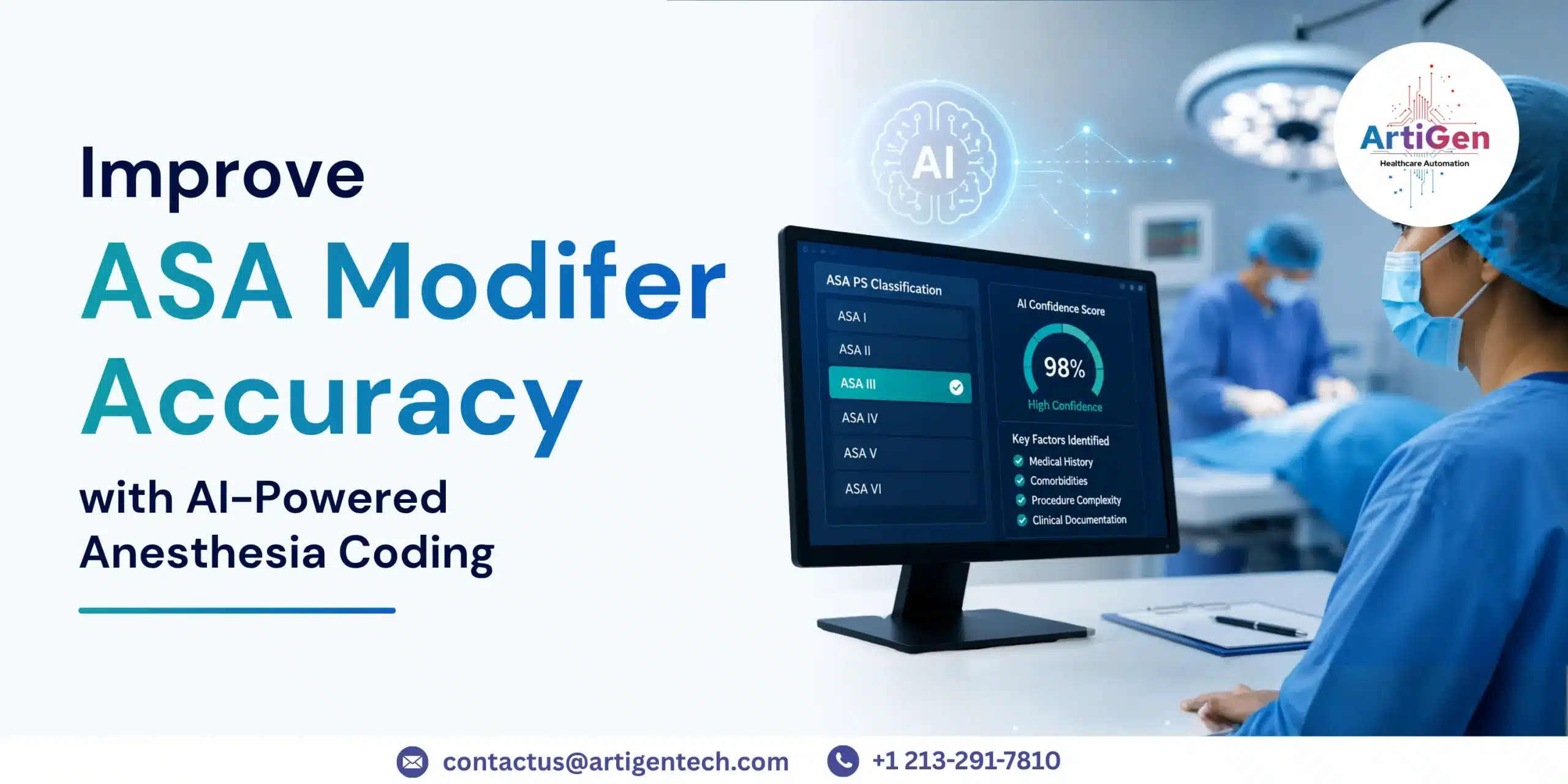
Using these data points, AI can compare documented conditions against established ASA Physical Status Classification criteria.
For example, if documentation shows:
- Diabetes with complications
- Chronic heart failure
- Significant pulmonary disease
But the assigned modifier reflects a low-risk patient, the platform can flag the discrepancy for review.
This type of intelligent validation helps improve both Anesthesia Coding accuracy and compliance.
The Relationship between Anesthesia CPT Codes and Physical Status Modifiers
Many healthcare professionals focus primarily on selecting the correct Anesthesia CPT Codes. However, coding accuracy depends on more than procedure selection alone.
The combination of:
- Anesthesia CPT Codes
- Physical Status Modifiers
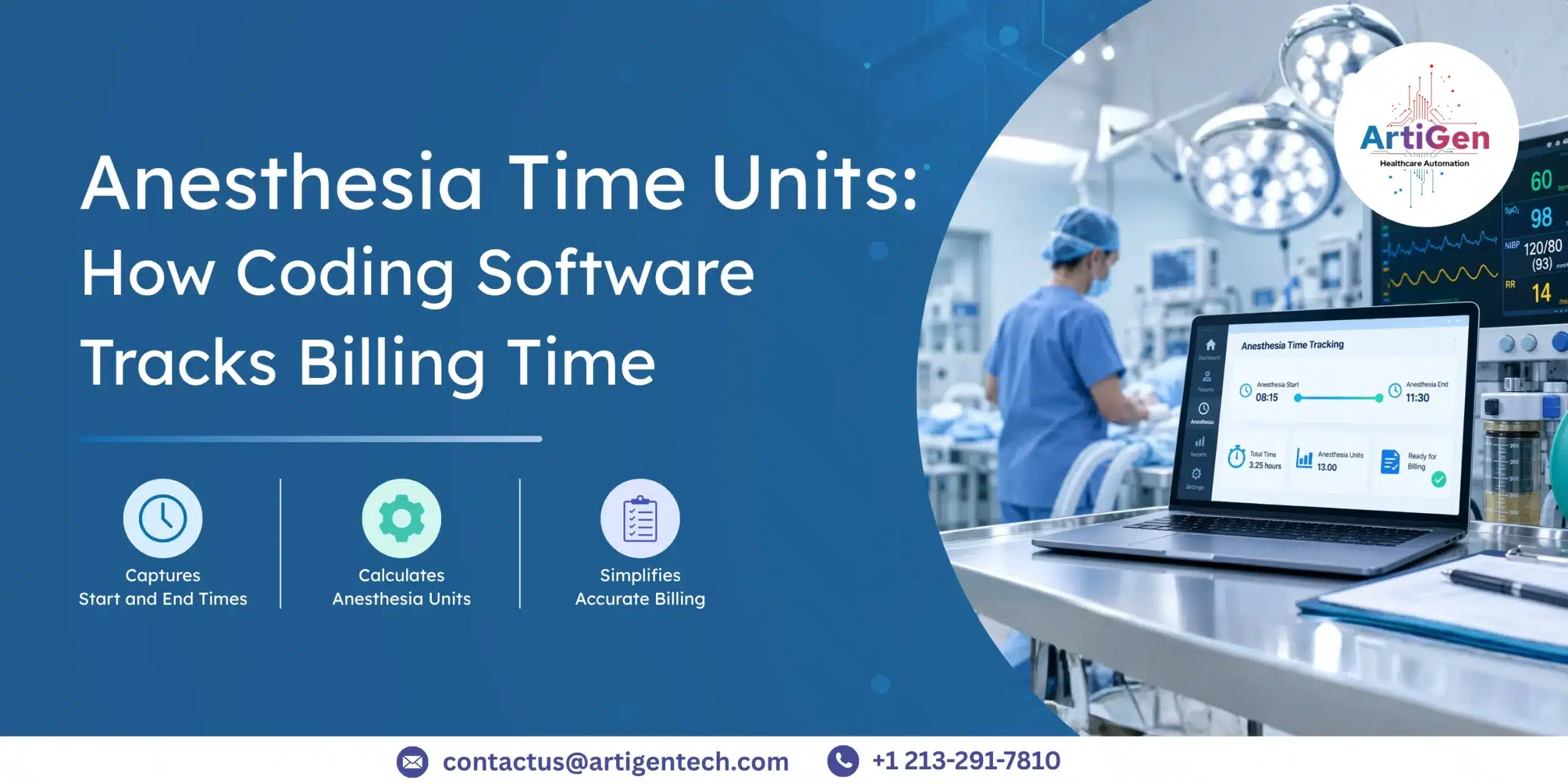
- Time units
- Base units
- Medical necessity documentation
Creates the foundation of anesthesia reimbursement.
If ASA Physical Status Modifiers are not proper, the claim may not accurately reflect the complexity of care provided.
This is why healthcare organizations are increasingly adding automated validation to their anesthesia workflows.
Supporting Compliance through Automated Medical Coding Software
Compliance remains a major concern for anesthesia providers and coding teams.
Payers continue to increase scrutiny around:
- Modifier selection
- Documentation support
- Medical necessity
- Coding consistency
Modern Automated Medical Coding Software can help address these challenges by continuously validating documentation against current coding standards.
Add AI-enabled review processes to Medical Coding for Anesthesia to reduce the administrative burden and improve compliance.
These intelligent systems also assist coders in staying current with Anesthesia Coding Guidelines and changing payer requirements.
Why Anesthesia Billing Guidelines Depend on Accurate Documentation
Successful reimbursement begins with complete and accurate clinical documentation.
Following established Anesthesia Billing Guidelines requires:
- Proper procedure coding
- Correct modifier assignment
- Documentation support
- Medical necessity validation
- Compliance review
When documentation lacks sufficient detail, assigning accurate ASA Physical Status Modifiers becomes difficult.
This is one of the primary reasons healthcare organizations continue investing in AI-powered validation technologies.
How Medical Coding Automation Supports Anesthesia Departments
Modern healthcare organizations process hundreds or even thousands of anesthesia records each month. Reviewing every encounter manually is resource-intensive and can create bottlenecks in the revenue cycle.
This is where Medical Coding Automation becomes valuable.
Advanced automation platforms can:
- Review anesthesia records automatically
- Extract clinical risk indicators
- Validate ASA Anesthesia Codes
- Cross-check documentation completeness
- Recommend appropriate Physical Status Modifiers
- Identify compliance risks
By automating repetitive review activities, organizations can allow coding professionals to focus on complex decision-making rather than routine validation tasks.
The result is improved efficiency without sacrificing quality.
Reducing Audit Risk through Intelligent Coding Validation
Incorrect modifier assignment remains one of the most common reasons for coding audits in anesthesia services.
When documentation does not support the assigned ASA Physical Status Modifiers, healthcare organizations may face:
- Claim denials
- Reimbursement reductions
- Compliance concerns
- Increased audit exposure
- Revenue leakage
AI powered validation tools help to mitigate these risks by identifying documentation gaps prior to claims submission to payers.
Many organizations using specialized Medical Coding Services also use automated validation workflows to improve their internal quality assurance processes.
It also allows for continuous review throughout the coding lifecycle, not just retrospective audits.
The Importance of Following Anesthesia Coding Guidelines
Accurate modifier assignment requires more than technology. Coders must also follow established Anesthesia Coding Guidelines to ensure consistency and compliance.
These guidelines help define:
- Appropriate modifier usage
- Documentation requirements
- Coding standards
- Reporting expectations
- Medical necessity criteria
AI platforms elevate these workflows by constantly comparing documentation to current Anesthesia Coding Guidelines.
This blend of clinical expertise and intelligent automation enables organizations to uphold high coding quality standards while keeping on track with evolving regulatory requirements.
How ArtigenTech Supports Anesthesia Coding Excellence
At ArtigenTech, we understand that successful Anesthesia Medical Coding is a combination of clinical understanding and technological innovation.
We offer AI-powered Medical Coding Solutions that help healthcare organizations improve coding accuracy, streamline workflows and strengthen compliance for anesthesia services.
Using intelligent automation, ArtigenTech helps organizations:
- Validate ASA Physical Status Modifiers
- Improve Medical Coding for Anesthesia
- Support accurate Anesthesia CPT Codes
- Enhance documentation review
- Reduce coding inconsistencies
- Improve compliance monitoring
- Strengthen audit readiness
- Increase coding productivity
Our solutions leverage clinical intelligence and advanced automation to enable healthcare organizations to realize more accurate coding results with less manual effort.
The Future of AI Medical Coding in Anesthesia
The future of AI Medical Coding is much more than just code assignment.
Next generation platforms are evolving into intelligent clinical support systems that understand patient complexity, identify documentation gaps and suggest corrective actions before claims being submitted.
Future developments in Automated Medical Coding Software are expected to include:
Predictive Coding Validation
AI will proactively identify cases at risk for denial or audit before coding is completed.
Real-Time Documentation Support
Providers will receive recommendations during documentation rather than after claim submission.
Continuous Learning Models
Machine learning algorithms will continuously improve their understanding of complex anesthesia cases and evolving coding standards.
Enhanced Compliance Monitoring
Organizations will be able to track modifier use patterns and compliance risks department-wide in real time.
These advancements will continue to transform anesthesia coding from a retrospective process to a proactive, intelligence-driven workflow.
Why Healthcare Organizations Are Embracing AI for Anesthesia Coding
Healthcare leaders increasingly recognize that automation alone is not enough.
Successful coding requires systems that understand clinical context.
AI-powered validation provides:
✓ Improved coding consistency
✓ Better documentation integrity
✓ Enhanced compliance performance
✓ Faster coding workflows
✓ Reduced audit exposure
✓ Greater reimbursement accuracy
✓ Stronger operational efficiency
As healthcare documentation continues to grow in complexity, intelligent coding support will become an essential component of modern revenue cycle operations.
Conclusion
Accurate assignment of ASA physical status modifiers is critical for anesthesia reimbursement, compliance and quality documentation. However, these modifiers can be manually validated, which can be time-consuming, subjective, and prone to errors.
AI Medical Coding helps healthcare organizations improve accuracy of ASA physical status Classification, reinforce compliance with anesthesia coding guidelines, and enable compliant billing.
Today’s anesthesia coding software and medical coding automation solutions offer the clinical intelligence to assess patient complexity, validate modifier selection, and ensure documentation supports coding decisions.
At ArtigenTech, we empower healthcare organizations to revolutionize anesthesia medical coding through intelligent automation, advanced clinical validation and AI-powered coding solutions that enhance accuracy, efficiency and compliance.