10 Essential Tips for Flawless Diagnostic Radiology Coding
Introduction to Diagnostic Radiology Coding
Diagnostic imaging has become one of the most critical pillars of modern healthcare. From routine chest X-rays to advanced MRI and CT scans, imaging procedures help physicians diagnose diseases faster, improve treatment planning, and enhance patient outcomes. However, as imaging technologies continue to evolve, the complexity of radiology medical coding and reimbursement processes has also increased significantly.
Accurate radiology billing and coding is no longer just about assigning procedure codes. Today, healthcare providers must navigate evolving payer regulations, CMS radiology billing guidelines, CPT updates, ICD-10 specificity requirements, modifier usage, and documentation standards to avoid denials and revenue leakage.
A minor mistake in radiology billing codes, missing modifiers, inaccurate diagnosis mapping or incomplete documentation can cause delayed reimbursements, compliance issues and claim denials. That is why healthcare organizations are increasingly relying on advanced medical coding radiology workflows, automation technologies and AI-enabled coding validation systems to ensure coding accuracy.
At ArtigenTech, we partner with healthcare organizations to optimize diagnostic radiology billing, improve coding accuracy, automate documentation verification and streamline imaging-related revenue cycle workflows through intelligent healthcare automation solutions.
In this complete guide, we cover the 10 essential tips for flawless diagnostic radiology coding including best practices for CPT coding, ICD-10 validation methods, application of modifiers, documentation requirements, denial prevention tips, and advanced automation tactics to enhance coding efficiency and compliance.
Understanding Diagnostic Radiology Coding
Before you can learn the best practices, it is important to understand the basics of radiology in medical billing.
Diagnostic radiology coding involves assigning accurate:
- CPT® procedure codes
- ICD-10-CM diagnosis codes
- HCPCS codes
- Revenue codes
- Modifiers
These codes ensure providers receive appropriate reimbursement for imaging procedures while maintaining payer compliance.
Common imaging modalities include:
- X-rays
- CT scans
- MRI
- Ultrasound
- Mammography
- Fluoroscopy
- Nuclear medicine
- Interventional imaging
Every imaging encounter requires precise alignment between:
- Clinical documentation
- Physician interpretation
- Imaging procedure performed
- Diagnosis justification
- Medical necessity validation
This is where strong radiology coding guidelines become essential.
Why Accurate Radiology Coding Matters
Errors in radiology medical billing can lead to complex operational and financial challenges.
Common consequences include:
- Claim denials
- Revenue loss
- Compliance penalties
- Audit risks
- Delayed reimbursements
- Increased rework
- Poor clean claim rates
Accurate radiology CPT coding helps healthcare organizations:
- Improve reimbursement accuracy
- Reduce denials
- Accelerate claims processing
- Maintain compliance
- Enhance operational efficiency
- Improve patient billing transparency
As imaging volumes continue to rise, providers need scalable and intelligent radiology billing guidelines to maintain coding consistency.
Tip 1: Always Review the Complete Radiology Documentation
One of the most important radiology coding guidelines is to review the entire imaging report before assigning codes.
A complete review should include:
- Physician order
- Clinical indications
- Imaging findings
- Impression section
- Procedure details
- Contrast usage
- Number of views
- Anatomical site
A lot of coding errors are the result of coders using only the procedure description and not reading the entire report.
Key Areas to Validate
Indication Section
This explains why the imaging study was ordered.
Example:
- Chest pain
- Abdominal injury
- Persistent headache
- Right knee pain
Impression Section
The final diagnosis should primarily come from the radiologist’s impression.
Example:
- Pulmonary embolism
- Lumbar disc herniation
- Right lower lobe pneumonia
Proper documentation improves:
- CPT ICD-10 code validation radiology claims integration
- Medical necessity compliance
- Coding specificity
- Claim Denial prevention
Tip 2: Master CPT Imaging Codes
Proper selection of CPT imaging codes is critical to successful reimbursement.
Every imaging procedure has unique CPT requirements based on:
- Body region
- Imaging modality
- Number of views
- Contrast administration
- Guidance techniques
Examples include:
- Chest X-ray CPT codes
- CT abdomen CPT codes
- MRI brain CPT codes
- Ultrasound pelvis CPT codes
Coders must understand detailed CPT radiology guidelines to avoid incorrect coding.
Common Coding Challenges in Diagnostic Radiology
Incorrect View Counting
The number of documented views directly impacts the CPT code selection.
Example:
- Chest X-ray 1 view
- Chest X-ray 2 views
- Chest X-ray 4+ views
Contrast Coding Errors
Coders must differentiate:
- Without contrast
- With contrast
- Without contrast followed by with contrast
Improper contrast selection is a major cause of denial on diagnostic radiology billing.
Tip 3: Understand Professional vs Technical Components
One of the most overlooked areas in radiology billing and coding is component billing.
Radiology services often include:
- Professional component
- Technical component
- Global service
Modifier 26 – Professional Component
Used when the physician only interprets the imaging study.
Example:
Hospital owns imaging equipment but radiologist reads the scan.
Modifier TC – Technical Component
Used when billing only for equipment, supplies, and technicians.
Global Billing
Used when the provider performs both:
- Imaging procedure
- Interpretation
Accurate modifier usage is essential under modern CMS radiology billing guidelines.
Tip 4: Validate Medical Necessity with ICD-10 Codes
Medical necessity validation plays a major role in payer reimbursement decisions.
The diagnosis code must justify the imaging procedure.
Example:
A CT angiography ordered for vague symptoms without supporting documentation may fail medical necessity validation.
Strong CPT ICD-10 code validation radiology claims integration ensures:
- Proper diagnosis mapping
- Payer acceptance
- Reduced denials
- Faster reimbursements
Best Practices
Use Definitive Diagnoses Whenever Available
Instead of coding symptoms:
- Use confirmed diagnosis from radiologist impression.
Avoid Unspecified Codes
Specific ICD-10 coding improves approval rates.
Incorrect diagnosis selection can significantly impact radiology billing guidelines compliance.
Tip 5: Follow NCCI Edit Guidelines Carefully
National Correct Coding Initiative (NCCI) edits prevent improper unbundling.
Many imaging services are bundled together under payer rules.
Coders must verify:
- Included services
- Separate billable procedures
- Modifier requirements
- Bundling restrictions
Ignoring NCCI edits can trigger:
- Claim denials
- Audit risks
- Overpayment recovery
- Compliance penalties
Strong adherence to radiology coding guidelines reduces billing errors and protects revenue integrity.
Tip 6: Use Radiology Modifiers Correctly
Modifiers are essential in radiology medical coding.
Incorrect modifier usage is one of the top denial causes in medical billing radiology workflows.
Common Radiology Modifiers
Modifier 26 – Professional interpretation
Modifier TC – Technical component
Modifier 50 – Bilateral procedures
RT/LT – Right side / Left side
Modifier 59 – Distinct procedural service
Accurate modifier application ensures proper reimbursement and payer compliance.
Tip 7: Verify Revenue Codes for Radiology Claims
Hospitals must also assign accurate revenue code for radiology services.
Revenue codes identify:
- Department
- Service category
- Cost center
Examples include:
- 0320 – Diagnostic radiology general
- 0350 – CT scan
- 0610 – MRI services
Incorrect revenue code for radiology mapping can result in:
- UB-04 claim rejection
- Billing mismatches
- Delayed payments
Hospitals should align:
- Revenue codes
- CPT codes
- HCPCS codes
- ICD-10 codes
For accurate claims processing.
Tip 8: Strengthen Documentation for Radiology Claims
Incomplete documentation is one of the biggest challenges in diagnostic radiology billing.
Documentation must clearly include:
- Procedure performed
- Imaging modality
- Clinical indication
- Physician interpretation
- Findings
- Impression
- Contrast details
- Laterality
- Number of views
Advanced imaging procedures require even greater specificity.
Common Documentation Gaps
Missing Contrast Details
Without proper contrast documentation:
- Coders may assign incorrect CPT imaging codes.
Missing Laterality
Failure to indicate RT/LT can cause denials.
Incomplete Impression
Ambiguous findings reduce coding specificity.
Improved documentation strengthens:
- Radiology billing and coding
- Coding compliance
- Reimbursement accuracy
Tip 9: Use AI and Automation for Coding Accuracy
Modern healthcare organizations increasingly use automation to improve medical coding radiology efficiency.
AI-driven coding systems can:
- Analyze imaging reports
- Suggest CPT codes
- Validate ICD-10 mapping
- Detect modifier errors
- Identify NCCI conflicts
- Improve coding consistency
At ArtigenTech, we help healthcare providers modernize radiology medical coding workflows with intelligent AI-powered automation systems.
Benefits of AI-Powered Radiology Coding
Faster Coding Turnaround
Automation reduces manual coding effort.
Improved Accuracy
AI improves:
- CPT selection
- ICD-10 specificity
- Modifier validation
Reduced Denials
Automated validation minimizes coding mismatches.
Better Compliance
AI systems align with evolving:
- CMS radiology billing guidelines
- Payer policies
- Coding updates
AI-powered radiology billing codes validation can lead to significant improvements in operational performance for healthcare organizations.
Tip 10: Continuously Train Radiology Medical Coders
Coding regulations evolve constantly.
Every skilled radiology medical coder must stay updated with:
- CPT revisions
- ICD-10 updates
- CMS rules & guidelines
- NCCI edits
- Modifier rules
- Payer policies
Continuous education improves:
- Coding accuracy
- Denial prevention
- Compliance management
Be Sure Reports Meet Minimum Requirements
Per ACR guidelines, diagnostic imaging reports should contain:
- Demographics
- Relevant clinical information
- Body of report (findings)
- Impression (conclusion or diagnosis)
- Physician signature
- Diagnostic studies (plain films)
Complete Exam” Documentation Must Be Complete
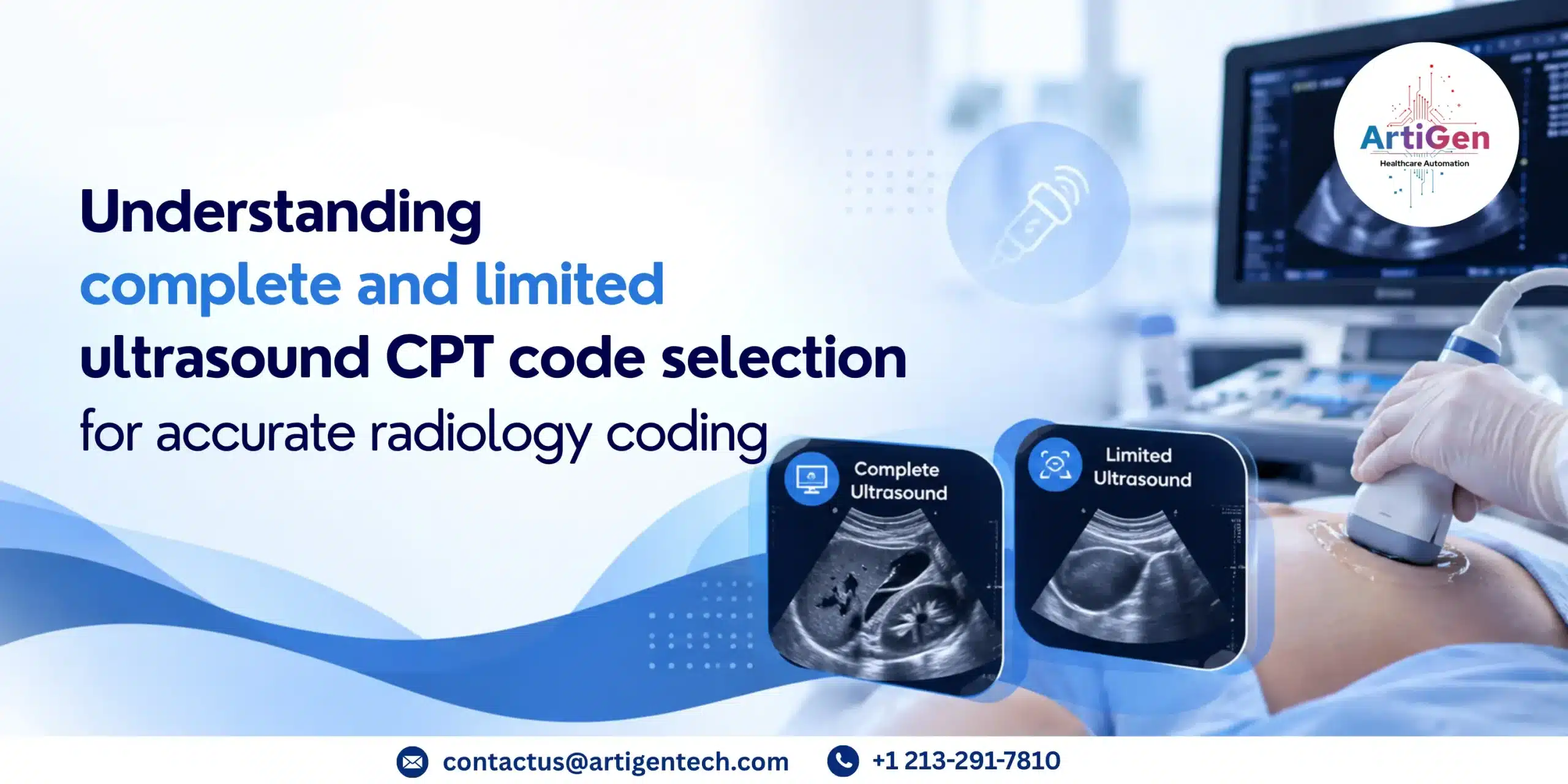
All diagnostic ultrasound examinations require permanent image documentation. Abdomen and retroperitoneal studies have strict documentation requirements to code for a complete exam.
A complete abdomen study (76700 Ultrasound, abdominal, real time with image documentation; complete) requires documentation of the liver, gall bladder, common bile ducts, pancreas, spleen, kidneys, and the upper abdominal aorta and inferior vena cava. If any one of the required anatomies is not documented, the study must be downcoded to a limited exam (76705 Ultrasound, abdominal, real time with image documentation; limited (eg, single organ, quadrant, follow-up)).
A complete retroperitoneum study (76770 Ultrasound, retroperitoneal (eg, renal, aorta, nodes), real time with image documentation; complete) consists of documentation of the kidneys, abdominal aorta, and common iliac artery origins. Alternatively, imaging of the kidneys and urinary bladder also constitutes a complete retroperitoneal study when the clinical indication for the exam consists of urinary pathology.
Oral/Rectal Administration Doesn’t Count as Contrast
Whether intravenous contrast was injected determines coding for CT and MRI. Only intravenous administration of contrast changes the code sets. Oral and/or rectal contrast is not billable as a “with contrast” study. To report contrast, the technique section of the dictated report must state, “with IV or intravenous contrast.”
Recommended Training Areas
Advanced Radiology CPT Coding
Understanding:
- Interventional radiology
- Diagnostic imaging
- Guidance procedures
Denial Management
Learning denial trends improves prevention strategies.
Automation Workflows
Coders should understand AI-assisted coding technologies.
Strong education programs strengthen overall medical billing for radiology performance.
Common Diagnostic Radiology Coding Errors
Healthcare providers frequently encounter:
- Incorrect CPT imaging codes
- Missing modifiers
- Invalid ICD-10 mapping
- Unbundling issues
- Incomplete documentation
- Medical necessity failures
- Duplicate billing
- Revenue code mismatches
These issues impact:
- Revenue cycle performance
- Claims acceptance
- Audit readiness
- Financial stability
Advanced automation and coding audits help reduce these risks.
Future of Radiology Billing and Coding
The future of radiology billing and coding is increasingly driven by:
- Artificial Intelligence
- Predictive analytics
- NLP-based coding
- Automated documentation validation
- Intelligent claims processing
- Real-time coding assistance
Emerging technologies are transforming:
- Radiology CPT coding
- Claims integration
- Coding validation
- Revenue optimization
Healthcare providers that embrace intelligent coding automation will gain:
- Faster reimbursements
- Higher coding accuracy
- Reduced denials
- Improved operational scalability
How ArtigenTech Supports Advanced Radiology Coding
At ArtigenTech, we help healthcare organizations modernize radiology coding and billing workflows through intelligent healthcare automation solutions.
Our solutions support:
- AI-powered coding validation
- Intelligent claims automation
- CPT and ICD-10 mapping
- Documentation review
- Modifier validation
- Coding compliance monitoring
- Workflow optimization
- Denial reduction strategies
We collaborate with healthcare experts and the most recent automation to support providers in increasing diagnostic radiology billing accuracy and operational effectiveness.
Conclusion
Accurate diagnostic radiology coding is essential to financial stability, compliance and operational efficiency for today’s healthcare organizations.
With proper radiology coding, strong coding guidelines, validating documentation, mastering modifiers, understanding CPT imaging codes, and leveraging AI-driven automation can dramatically improve coding performance.
As radiology billing and coding become increasingly complex, healthcare providers must move beyond manual processes and embrace intelligent, scalable coding strategies.
By implementing these 10 essential tips, healthcare organizations can:
- Reduce denials
- Improve reimbursement accuracy
- Enhance compliance
- Accelerate revenue cycles
- Optimize radiology operations
As imaging volumes and coding complexity increase, AI-enabled coding automation and intelligent validation systems will be important change agents in the future of medical coding radiology workflows.