Emerging Trends Reshaping GERD Diagnosis and Care
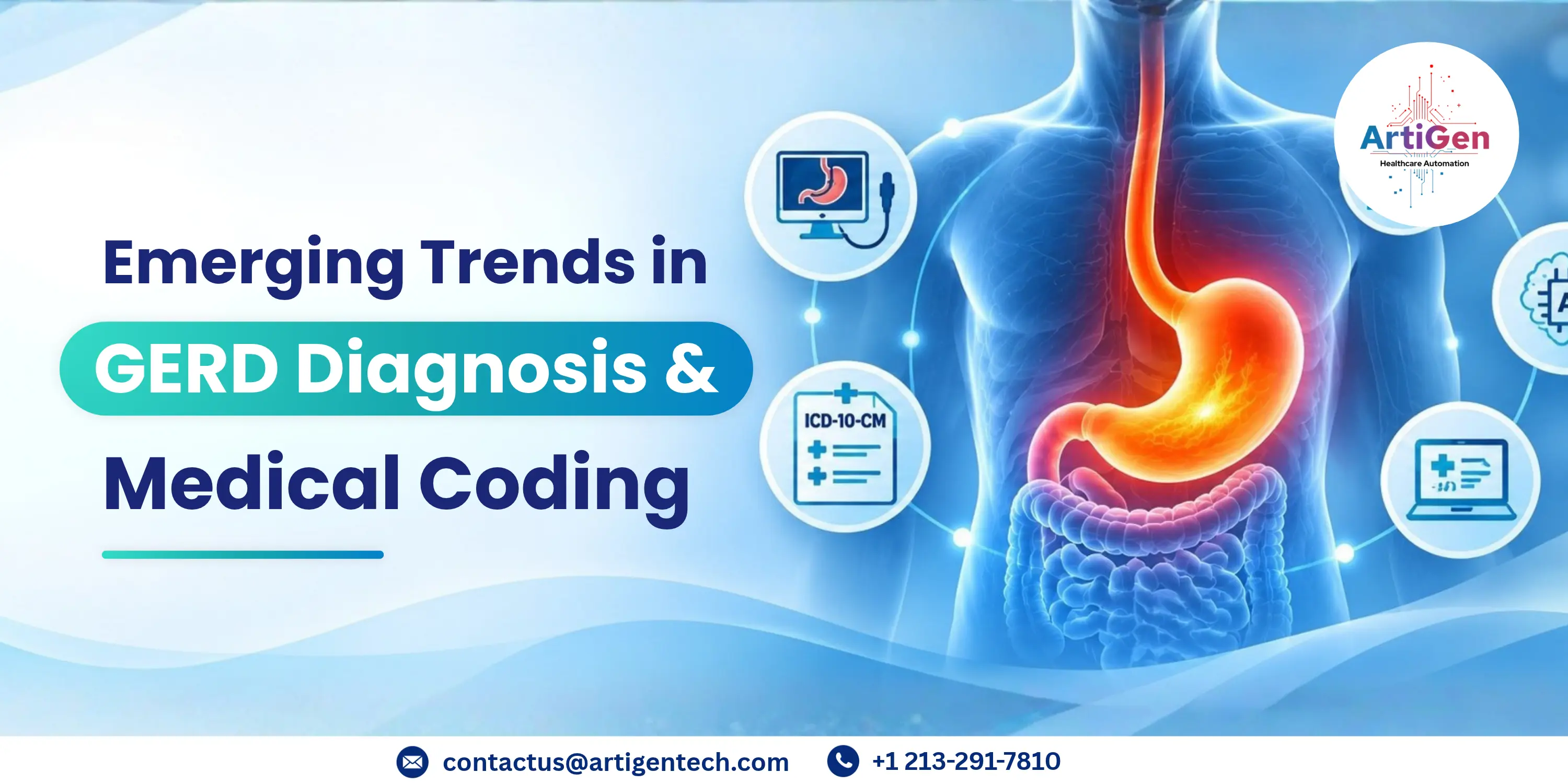
Gastroesophageal reflux disease (GERD) diagnosis and care are moving toward more personalized, technology-supported approaches. Advances in artificial intelligence, reflux monitoring, diagnostic testing, endoscopic treatment, and targeted therapies are changing how clinicians evaluate and manage patients.
These developments also have implications for medical coding. As diagnostic information becomes more detailed, accurate GERD documentation is increasingly important for connecting clinical findings with the appropriate GERD diagnosis code, GERD ICD-10 coding, and treatment decisions.
Advanced Diagnostics Are Changing GERD Care
Traditional GERD evaluation often depends on symptoms, clinical history, medication response, and diagnostic testing. Newer GERD diagnostic technology is helping clinicians evaluate reflux more precisely and distinguish GERD from other gastrointestinal conditions.
Multichannel intraluminal impedance-pH monitoring, wireless pH monitoring, mean nocturnal baseline impedance, and other testing methods can provide additional information about reflux patterns. These technologies are making GERD monitoring more detailed and may help clinicians evaluate patients whose symptoms do not clearly respond to treatment.
Improved GERD monitoring can also provide information about nighttime reflux, symptom frequency, and treatment response. As these technologies become part of clinical workflows, strong documentation is needed to explain the findings and final diagnosis.
AI in Gastroenterology Is Expanding
One of the most significant developments is the growing role of AI in gastroenterology. Artificial intelligence and machine learning are being explored for endoscopic image analysis, lesion identification, clinical decision support, and patient risk assessment.
The use of AI in gastroenterology may help clinicians analyze large volumes of clinical information and recognize patterns that could support earlier or more precise assessment.
Another emerging area is AI in GERD diagnosis. Machine learning models are being investigated for analyzing endoscopic images, clinical questionnaires, and other information related to reflux disease. These applications could support clinicians when evaluating complex GERD symptoms and treatment decisions.
However, AI in GERD diagnosis should support clinical judgment rather than replace it. Provider assessment and accurate GERD documentation remain essential for diagnosis, treatment, and coding.
New GERD Diagnostic Technology
Emerging GERD diagnostic technology includes direct mucosal impedance, wireless pH capsules, impedance-pH monitoring, and other approaches designed to provide a clearer picture of reflux activity.
Direct mucosal impedance can provide information about epithelial integrity and may help differentiate reflux-related conditions from other gastrointestinal disorders.
Wireless monitoring can allow reflux information to be collected over an extended period without requiring traditional catheter-based monitoring throughout the entire assessment period.
These developments can improve GERD monitoring and provide clinicians with more information when evaluating difficult or treatment-resistant cases.
Biomarkers and Precision Medicine
Research into biomarkers is another emerging area in GERD care. Salivary pepsin, oral microbiome profiling, microRNAs, and baseline impedance are being studied for their potential role in identifying disease patterns and predicting treatment response.
These approaches support the broader movement toward precision medicine, where treatment decisions may increasingly be based on individual patient characteristics rather than symptoms alone.
For healthcare organizations, more detailed diagnostic information reinforces the need for accurate GERD documentation. Clinical findings, diagnostic results, provider assessment, and treatment plans should be clearly documented so that coding teams can determine the appropriate GERD diagnosis code.
GERD Symptoms and Treatment Are Becoming More Personalized
The relationship between GERD symptoms and treatment can vary significantly between patients. Heartburn and acid reflux may be common symptoms, but not every patient has the same disease pattern or treatment response.
Advanced testing and GERD monitoring can help clinicians better understand individual reflux patterns. This may support more personalized treatment decisions, particularly for patients who do not respond adequately to conventional approaches.
For coding teams, documentation should clearly distinguish symptoms from confirmed diagnoses. This is important because the dx code GERD should be based on the provider’s documented diagnosis rather than symptoms alone.
GERD ICD-10 Coding Still Depends on Documentation
Although technology is changing GERD diagnosis and care, coding remains documentation-driven.
The commonly used GERD ICD-10code for gastro-esophageal reflux disease without esophagitis is K21.9. When searching for GERD unspecified icd 10, coding professionals should confirm the provider’s documented diagnosis and review the applicable ICD-10-CM requirements.
Similarly, the ICD-10code GERD unspecified search is often associated with K21.9. However, coders should not automatically assign K21.9 simply because a patient reports reflux or heartburn.
The provider’s final assessment should support the selected GERD diagnosis code.
GERD with Esophagitis Requires Careful Review
When esophagitis is documented, the coding approach changes.
The GERD with esophagitis ICD-10 category includes:
- K21.00 – Gastro-esophageal reflux disease with esophagitis, without bleeding
- K21.01 – Gastro-esophageal reflux disease with esophagitis, with bleeding
Therefore, ICD-10GERD with esophagitis should be selected according to the provider’s documentation and the presence or absence of bleeding.
A coder should not automatically assign K21.9 when the medical record clearly documents esophagitis.
This makes accurate GERD documentation especially important. Diagnostic findings, provider assessment, and treatment decisions should clearly identify the condition being managed.
Acid Reflux and GERD Should Be Distinguished
Patients may use terms such as acid reflux, heartburn, and GERD interchangeably, but they may have different implications for coding.
A search for dx code for acid reflux does not automatically mean the patient should receive a GERD code. If the provider documents only acid reflux as a symptom, the coder should review the record before assigning a specific diagnosis.
Likewise, the dx code GERD should be supported by a provider-confirmed diagnosis.
Clear documentation of GERD symptoms and treatment can help coding teams understand whether the record represents a symptom, confirmed GERD, or another gastrointestinal condition.
Minimally Invasive Treatment Options Are Growing
Treatment innovation is another major trend in GERD care. Endoscopic approaches such as Transoral Incisionless Fundoplication (TIF), anti-reflux mucosectomy, and radiofrequency-based therapies are being used or studied for selected patients.
Magnetic sphincter augmentation is another option designed to improve the function of the lower esophageal sphincter and reduce reflux.
These approaches are expanding the range of GERD symptoms and treatment options available to appropriate patients.
As treatment becomes more diverse, documentation should clearly identify the patient’s diagnosis, procedure, clinical indication, and treatment response. This information supports both patient care and gastroenterology medical coding.
Pharmacological and Digital Innovations
Pharmacological research is also influencing GERD treatment. Potassium-competitive acid blockers (P-CABs) and targeted combination therapies are being explored as alternatives or additions to conventional acid suppression approaches.
At the same time, digital health platforms and mobile applications can support symptom tracking, medication adherence, lifestyle management, and remote GERD monitoring.
These tools can generate additional information about GERD symptoms and treatment, but the clinical record still needs clear provider documentation to support diagnosis and coding.
What These Trends Mean for Coding Teams
The evolution of AI in gastroenterology, AI in GERD diagnosis, and GERD diagnostic technology means coding teams may increasingly encounter detailed diagnostic information.
A strong coding workflow should focus on:
- Maintaining accurate GERD documentation
- Following current CMS GERD guidelines
- Verifying the documented GERD diagnosis code
- Reviewing diagnostic findings before GERD ICD-10 coding
- Distinguishing symptoms from confirmed diagnoses
- Reviewing documentation for esophagitis and bleeding
- Selecting the appropriate GERD ICD-10code
- Reviewing whether GERD unspecified ICD-10 or a more specific diagnosis applies
- Validating the dx code GERD against provider documentation
Technology can help identify potential documentation gaps, but qualified professionals should validate the final code.
The Future of GERD Diagnosis and Care
The future of GERD care is moving toward precision diagnostics, continuous monitoring, AI-supported assessment, minimally invasive procedures, and personalized treatment.
AI in gastroenterology may support clinicians in analyzing complex clinical information, while AI in GERD diagnosis may contribute to more efficient identification of reflux-related patterns.
At the same time, GERD monitoring and advanced GERD diagnostic technology can provide more detailed information about individual patients.
These developments make documentation more important, not less. Clear accurate GERD documentation connects diagnostic findings, provider assessment, treatment, and gastroenterology medical coding.
For coding professionals, understanding GERD ICD-10 coding, the GERD ICD-10 code, GERD unspecified ICD-10, ICD-10 code GERD unspecified, and GERD with esophagitis ICD-10 will remain important as diagnostic and treatment workflows evolve.
Conclusion
GERD diagnosis and care are being reshaped by AI, advanced diagnostics, continuous monitoring, minimally invasive interventions, and personalized treatment approaches. These technologies can improve clinical decision-making while creating more detailed healthcare records.
For healthcare organizations, the next step is connecting these advances with strong documentation and coding workflows. Following CMS GERD guidelines, maintaining accurate GERD documentation, and validating the appropriate GERD diagnosis code can help support consistent GERD ICD-10 coding.
As AI in gastroenterology, AI in GERD diagnosis, and GERD diagnostic technology continue to develop, ArtigenTech can help healthcare organizations manage technology-supported medical coding workflows while keeping documentation, coding accuracy, and clinical context connected.