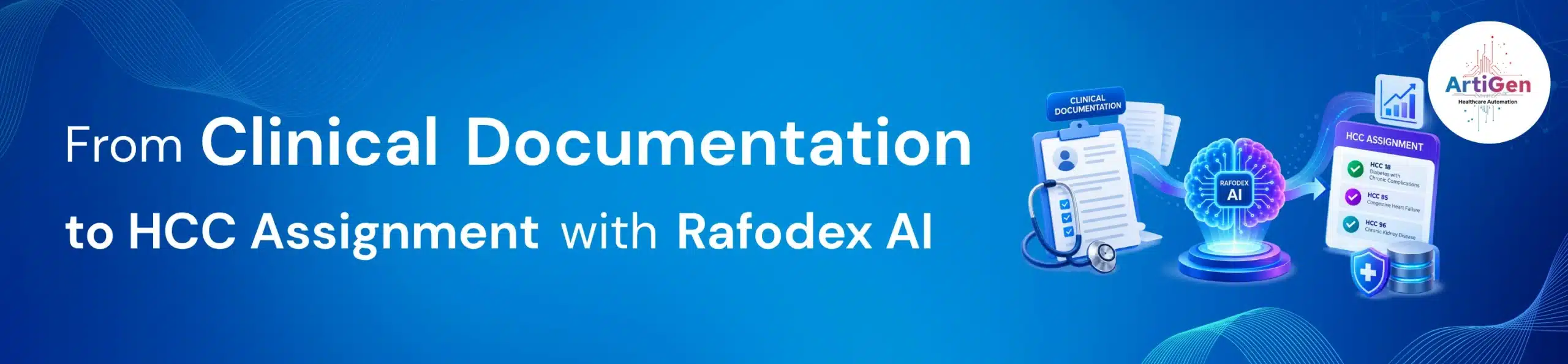
How Rafodex AI Connects Diagnosis, Documentation, MEAT, and HCC Assignment
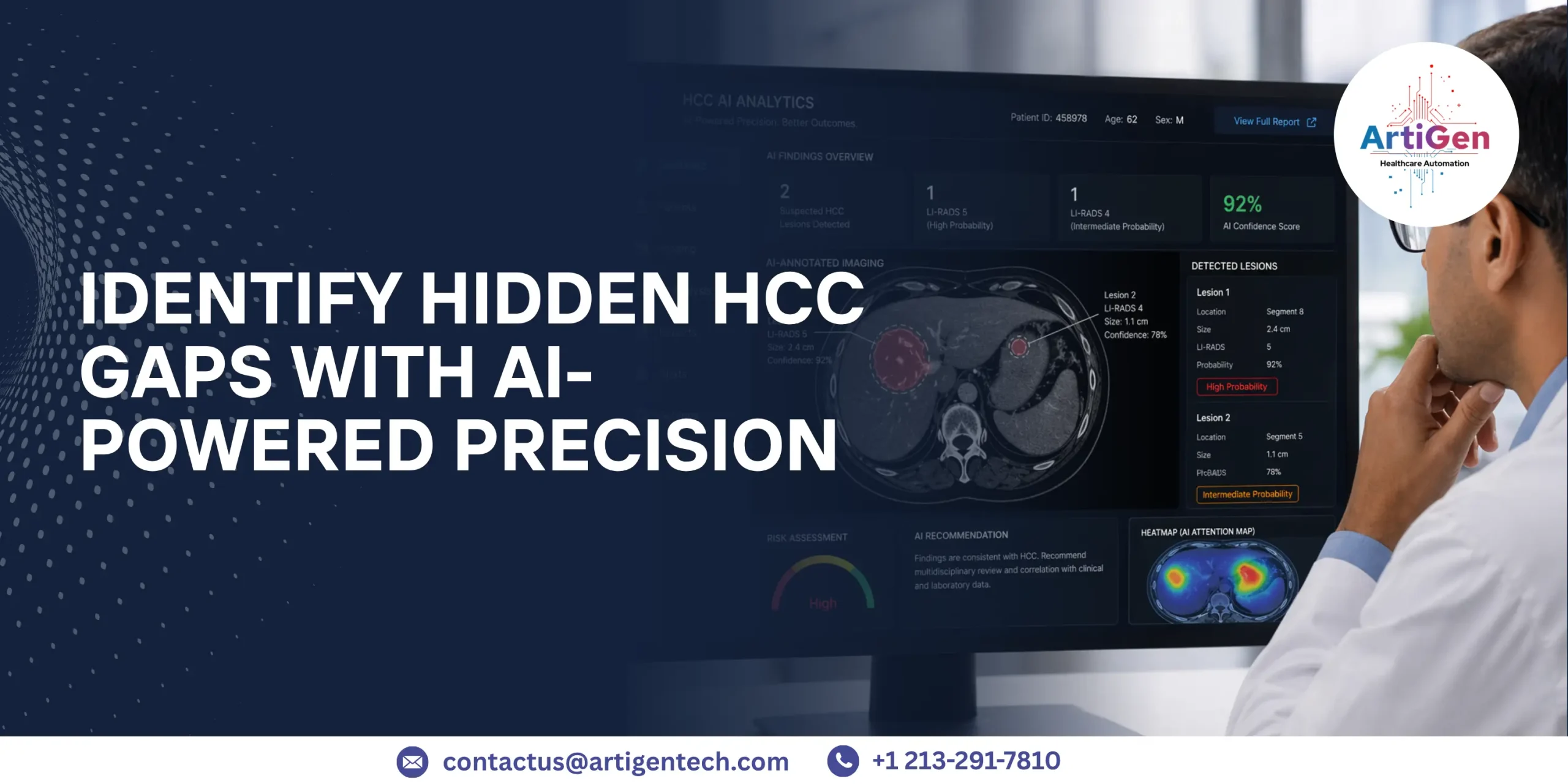
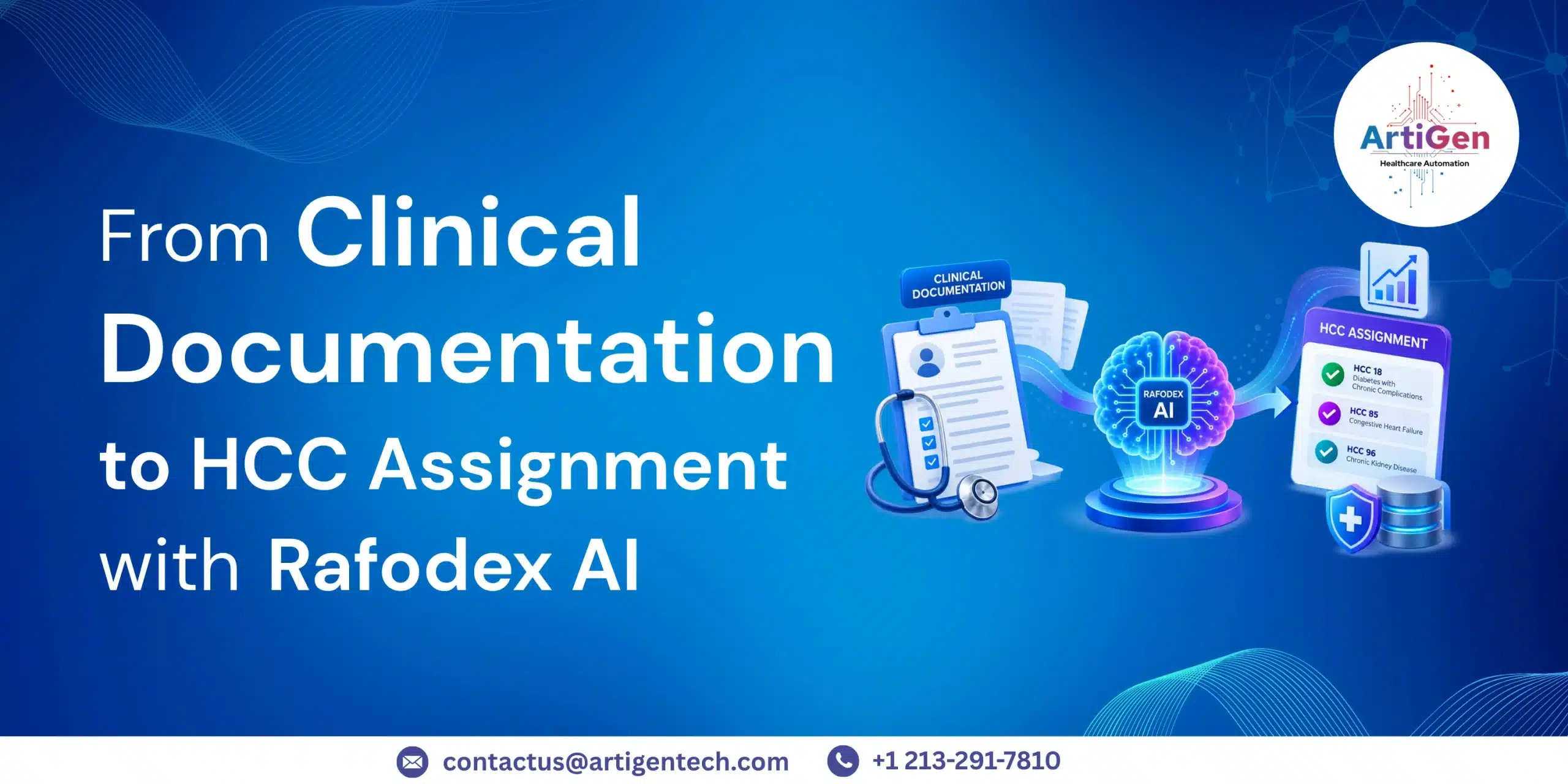
AI connects diagnosis, clinical documentation, MEAT evidence, ICD-10-to-HCC mapping, and final HCC assignment by turning unstructured medical records into a traceable coding workflow. It identifies documented conditions, checks whether the record supports MEAT criteria, maps supported ICD-10-CM diagnoses to the applicable CMS-HCC risk adjustment model, and flags documentation or compliance issues before submission.
This matters because CMS validates whether submitted diagnoses are supported by the medical record during risk-adjustment data validation. CMS also publishes model software and ICD-10 mappings by year, including the 2026 mappings, so organizations need model-aware workflows rather than static code lists.
Why Diagnosis Alone Is Not Enough
A diagnosis appearing somewhere in a patient’s chart does not automatically make it an appropriate risk-adjustment diagnosis. The documentation must support the condition as clinically relevant to the encounter and meet applicable coding and risk-adjustment requirements.
This is where clinical documentation improvement becomes critical.
Consider a physician note that states:
“Diabetes noted in history.”
That statement is very different from documentation showing that the provider evaluated the patient’s diabetes, reviewed its status, assessed complications, or continued treatment.
For risk adjustment coding, the difference between a problem-list reference and encounter-supported clinical management can be substantial. Strong medical coding documentation creates the evidence chain that connects the patient’s diagnosis to the coding decision.
Modern AI can help organizations identify that evidence systematically instead of relying entirely on retrospective manual chart review.
The Diagnosis-to-HCC Workflow
A reliable HCC risk adjustment process can be viewed as a connected sequence:
Clinical Encounter
↓
Provider Documentation
↓
Diagnosis Identification
↓
MEAT Criteria Review
↓
ICD-10-CM Assignment
↓
ICD-10 HCC Mapping
↓
CMS-HCC Model Validation
↓
HCC Validation
↓
RAF Score Calculation
↓
Audit & Compliance Review
The value of AI is not simply automating one step. It is connecting every step so coding teams can trace why a diagnosis was identified, what documentation supports it, and how it became an HCC candidate.
Where Clinical Documentation Improvement Fits
Clinical documentation improvement sits at the center of this workflow because the quality of provider documentation influences every downstream stage.
High-quality HCC documentation should clearly establish the condition, its clinical relevance, and the provider’s management of it.
For example, instead of documenting:
“CKD – history.”
A more useful clinical record may explain the condition’s current status, monitoring, assessment, and management as appropriate to the encounter.
This is why modern risk adjustment documentation programs focus on documentation specificity rather than simply increasing the number of diagnoses captured.
AI-supported clinical documentation improvement can help identify:
- Conditions mentioned but not addressed
- Documentation that lacks specificity
- Potentially unsupported diagnoses
- Missing clinical indicators
- Inconsistent terminology
- Opportunities for provider clarification
The goal is not to create diagnoses. The goal is to make existing clinical work accurately visible in the documentation.
Understanding MEAT Criteria
The MEAT criteria framework is commonly used in HCC coding workflows to assess whether documented conditions are supported through clinical activity.
MEAT refers to:
- Monitor
- Evaluate
- Assess/Address
- Treat
For organizations using MEAT criteria for HCC coding, AI can examine the encounter for evidence associated with these activities.
Monitor
Examples may include reviewing laboratory values, disease progression, symptoms, or medication response.
Evaluate
The provider may evaluate the severity or status of a condition, review diagnostic results, or assess changes in the patient’s health.
Assess/Address
The assessment may describe the current state of the condition, associated complications, or a management decision.
Treat
Treatment may include medications, therapy, procedures, referrals, or other documented management.
Using HCC coding with MEAT criteria helps coding professionals move beyond keyword matching and toward evidence-based validation.
How AI Links MEAT to Diagnosis
Traditional medical coding documentation review is often performed manually. A coder may need to search across progress notes, assessment and plan sections, medication lists, laboratory results, and other records to determine whether a condition is supported.
AI can consolidate these signals.
For example:
Diagnosis: Heart failure
Evidence: Current assessment, medication management, symptom monitoring, follow-up plan
The system can connect the diagnosis with supporting evidence and present the relationship to the coder.
This is the foundation of intelligent HCC coding automation.
AI can identify documentation associated with the MEAT criteria for HCC coding, distinguish active management from historical references, and prioritize cases requiring human review.
ICD-10 HCC Mapping: Connecting Codes to Risk Models
Once a supported diagnosis has been identified and coded, the next step is mapping the ICD-10-CM diagnosis to the appropriate HCC category.
ICD-10 HCC mapping is model-dependent. CMS publishes model software and ICD-10 mappings by year, and the applicable CMS-HCC risk adjustment model must be used for the relevant payment year. CMS lists 2026 model software and ICD-10 mappings, and its 2026 Medicare Advantage rate announcement states that the three-year phase-in of the 2024 CMS-HCC model was completed for CY 2026, with 100% of risk scores calculated using that model.
This means a modern coding platform cannot rely on a static mapping table.
An effective AI workflow needs model-aware logic that connects:
ICD-10-CM code → model mapping → HCC category → risk factor → RAF impact
This is especially important for teams working across multiple payment years, model versions, or health-plan environments.
What Is the RAF Score?
The RAF score, or risk adjustment factor (RAF) score, summarizes predicted risk within the applicable risk-adjustment methodology.
The objective is not to maximize the number of codes. The objective is to accurately capture supported patient complexity.
A reliable risk adjustment model therefore depends on:
- Complete clinical documentation
- Correct diagnosis coding
- Appropriate HCC mapping
- Compliance with applicable reporting rules
AI can help connect these components and identify where documentation or coding needs additional review.
How AI Medical Coding Connects the Entire Process
Traditional workflows often use separate tools for documentation review, coding, mapping, auditing, and reporting.
AI medical coding can connect those tasks into one intelligent workflow.
A modern platform can:
- Read clinical notes using NLP
- Identify diagnoses and clinical concepts
- Detect MEAT-related evidence
- Support ICD-10 coding
- Apply current CMS-HCC coding logic
- Perform HCC validation
- Flag documentation concerns
- Support HCC coding audit workflows
- Generate traceable coding evidence
This reduces the gap between clinical documentation and risk-adjustment reporting.
Automated Medical Coding for HCC Workflows
Automated medical coding becomes especially valuable when organizations process large patient populations.
Manual HCC review can involve thousands of charts, multiple providers, and extensive documentation. Medical coding automation service can prioritize records based on documentation complexity, potential HCC relevance, or missing evidence.
However, automation should not operate as an autonomous diagnosis generator.
The correct model is:
AI identifies → AI validates → Coder reviews → Organization submits
This approach supports efficiency while preserving human oversight and HCC coding compliance.
HCC Validation and Audit Readiness
An effective HCC validation process should establish a clear chain between the submitted diagnosis and the supporting medical record.
This is particularly important because CMS RADV reviews whether submitted diagnoses are supported by medical records, and unsupported diagnoses may result in overpayment recovery. CMS’s current RADV guidance emphasizes record validity and review of the complete medical record before final coding determinations.
An AI-enabled HCC coding audit can help organizations perform pre-submission checks such as:
- Diagnosis-to-documentation validation
- MEAT evidence review
- Provider attribution checks
- Date-of-service validation
- Documentation completeness checks
- ICD-10-to-HCC mapping verification
These controls strengthen risk adjustment documentation guidelines compliance and improve audit readiness.
Real-World Example: From Diagnosis to HCC
Consider a patient with diabetes and a documented complication.
Step 1: Clinical Documentation
The provider documents the condition, current status, and management plan.
Step 2: MEAT Review
AI identifies evidence showing the condition was evaluated and managed during the encounter.
Step 3: ICD-10 Coding
The coder assigns the appropriate ICD-10-CM diagnosis based on the documentation.
Step 4: ICD-10 HCC Mapping
The platform applies the appropriate model-year mapping.
Step 5: HCC Validation
The system checks whether the diagnosis is supported and whether it maps to the applicable HCC.
Step 6: RAF Review
The validated HCC contributes to the applicable RAF score calculation according to the model and reporting rules.
This creates a traceable workflow instead of treating HCC assignment as a standalone coding task.
Best Practices for Risk Adjustment Documentation
Organizations looking to strengthen risk adjustment documentation should focus on several fundamentals:
Document Active Conditions
Avoid relying on historical problem-list entries when the encounter documentation does not establish current relevance.
Link Assessment to Management
The record should clearly show how the provider evaluated, addressed, monitored, or treated the condition.
Use Specific Clinical Language
Specific documentation improves coding clarity and supports more accurate diagnosis selection.
Validate Before Submission
Use AI-driven HCC validation to detect gaps before they become audit findings.
Maintain Model Awareness
Because CMS updates model software and mappings, the coding system should use the correct model and mapping year for the encounter/payment context.
How ArtigenTech Connects Diagnosis, Documentation, MEAT, and HCC
ArtigenTech’s AI-powered approach is designed to connect the clinical narrative to the coding and risk-adjustment workflow.
The platform can support:
- Clinical documentation improvement
- Risk adjustment coding
- MEAT criteria validation
- HCC documentation analysis
- ICD-10 HCC mapping
- HCC coding automation
- HCC validation
- Audit-ready documentation review
- Model-aware coding workflows
Instead of analyzing a diagnosis in isolation, intelligent automation evaluates the relationship between the diagnosis, provider documentation, MEAT evidence, ICD-10 code, HCC mapping, and applicable risk model.
This creates a more transparent medical coding automation workflow for health plans, provider organizations, and risk-adjustment teams.
Frequently Asked Questions
What are MEAT criteria for HCC coding?
MEAT criteria for HCC coding are used to evaluate whether documentation demonstrates that a condition was Monitored, Evaluated, Assessed/Addressed, or Treated during the encounter.
How does AI support HCC coding compliance?
AI can compare documentation, diagnosis coding, MEAT evidence, and model mappings to identify potential discrepancies before submission. This supports HCC coding compliance and audit readiness.
How does ICD-10 HCC mapping affect the RAF score?
An ICD-10-CM diagnosis may map to one or more HCC categories depending on the applicable CMS model and mapping year. The resulting HCCs are then used within the risk-adjustment methodology to calculate risk scores. CMS publishes annual model software and ICD-10 mappings for this purpose.
Key Takeaways
- Clinical documentation improvement is the foundation of accurate risk adjustment.
- Risk adjustment coding requires more than identifying diagnoses; documentation must support the reported condition.
- MEAT criteria for HCC coding help connect clinical activity to a documented diagnosis.
- ICD-10 HCC mapping must be aligned with the applicable CMS model and mapping year.
- HCC validation strengthens audit readiness and coding confidence.
- HCC coding automation can reduce manual review and prioritize records that require coder attention.
- AI medical coding connects documentation, coding, MEAT evidence, and HCC assignment in a single workflow.
- Strong risk adjustment documentation guidelines and consistent medical coding documentation support compliant reporting.
Conclusion
HCC risk adjustment is not a single coding step. It is a connected process that begins with provider documentation and continues through diagnosis identification, MEAT validation, ICD-10 coding, HCC mapping, and risk-score calculation.
The strongest workflows make these connections visible.
By combining AI medical coding, automated medical coding, clinical intelligence, and model-aware HCC coding automation, organizations can identify documentation gaps earlier, validate MEAT evidence more consistently, and reduce the manual effort involved in HCC review.
At ArtigenTech, intelligent automation helps connect the full chain—from medical coding documentation and MEAT criteria to ICD-10 HCC mapping, HCC validation, and HCC coding audit readiness. The result is a more transparent, scalable, and compliant approach to risk adjustment that supports better documentation quality and more reliable coding decisions.