How Radiology Coding Connects Imaging Technique to Correct CPT Procedure
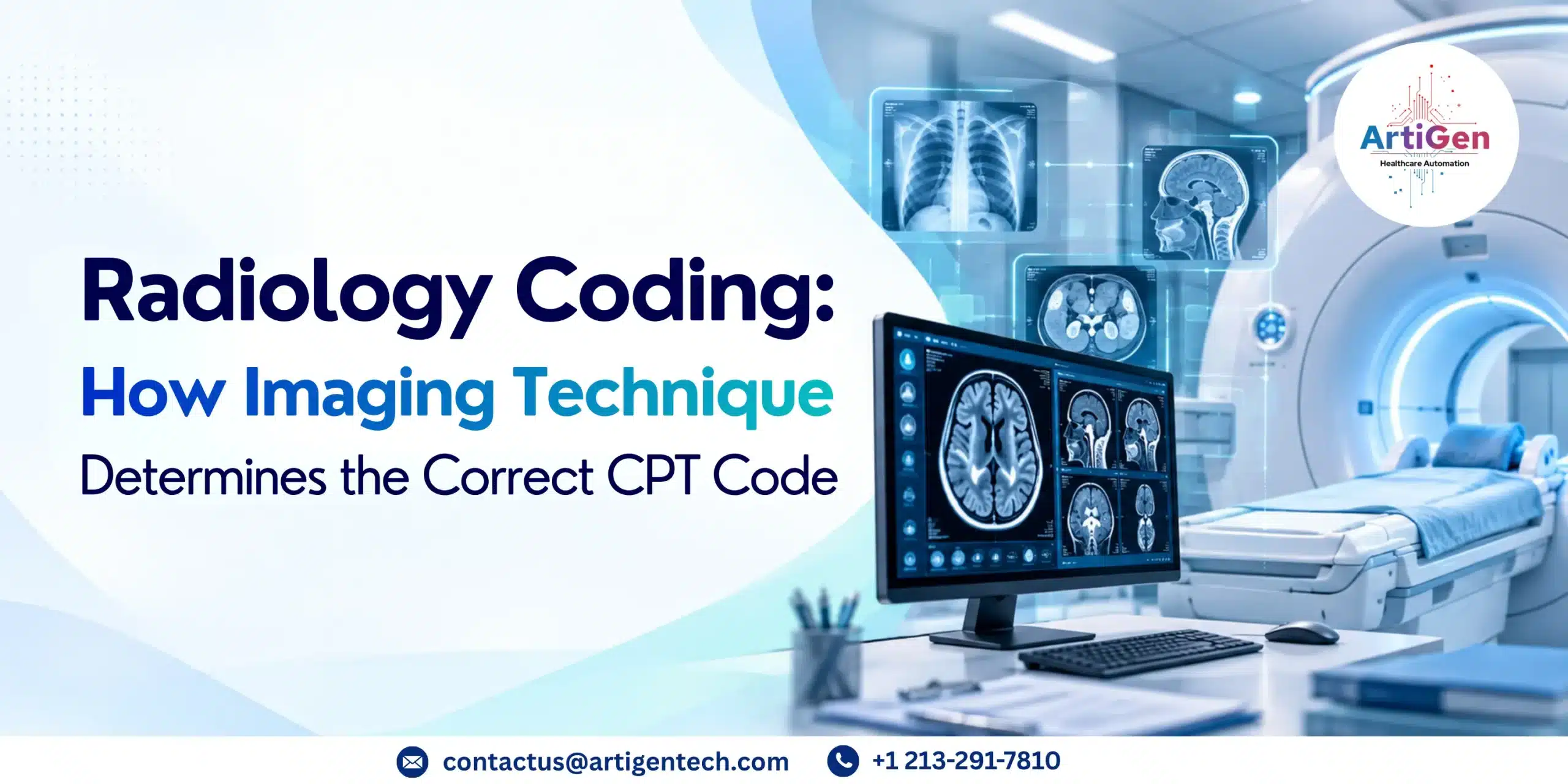
Radiology coding begins with an imaging modality, but payment accuracy is far more than determining if the study is an MRI, CT, X-ray or ultrasound. The correct procedure code must be associated with the imaging modality, body region, protocol, contrast, views, extent of the examination and documentation.
Imaging modality coding is therefore a crucial component of radiology medical coding. The radiology procedure Codes for the same body region can differ considerably depending on whether the region was examined by MRI, CT, ultrasound or X-ray.
Accurate radiology CPT coding is also more documentation-driven and technology-assisted in today’s healthcare environment. CMS has a dedicated NCCI chapter for radiology coding services and updates its code and payment resources regularly.
How Do Coders Match an Imaging Technique to a CPT Code?
Coders look at five key pieces to decide the proper CPT procedure for the imaging modality:
Modality + Anatomy + Technique / Protocol + Contrast / Views + Documentation
For example, MRI CPT Codes are determined by the anatomic site and whether contrast is used. CPT Codes for CT scan differ based on the body region, contrast protocol, and service performed. X-ray CPT Codes may be based on the body area and the number of views.
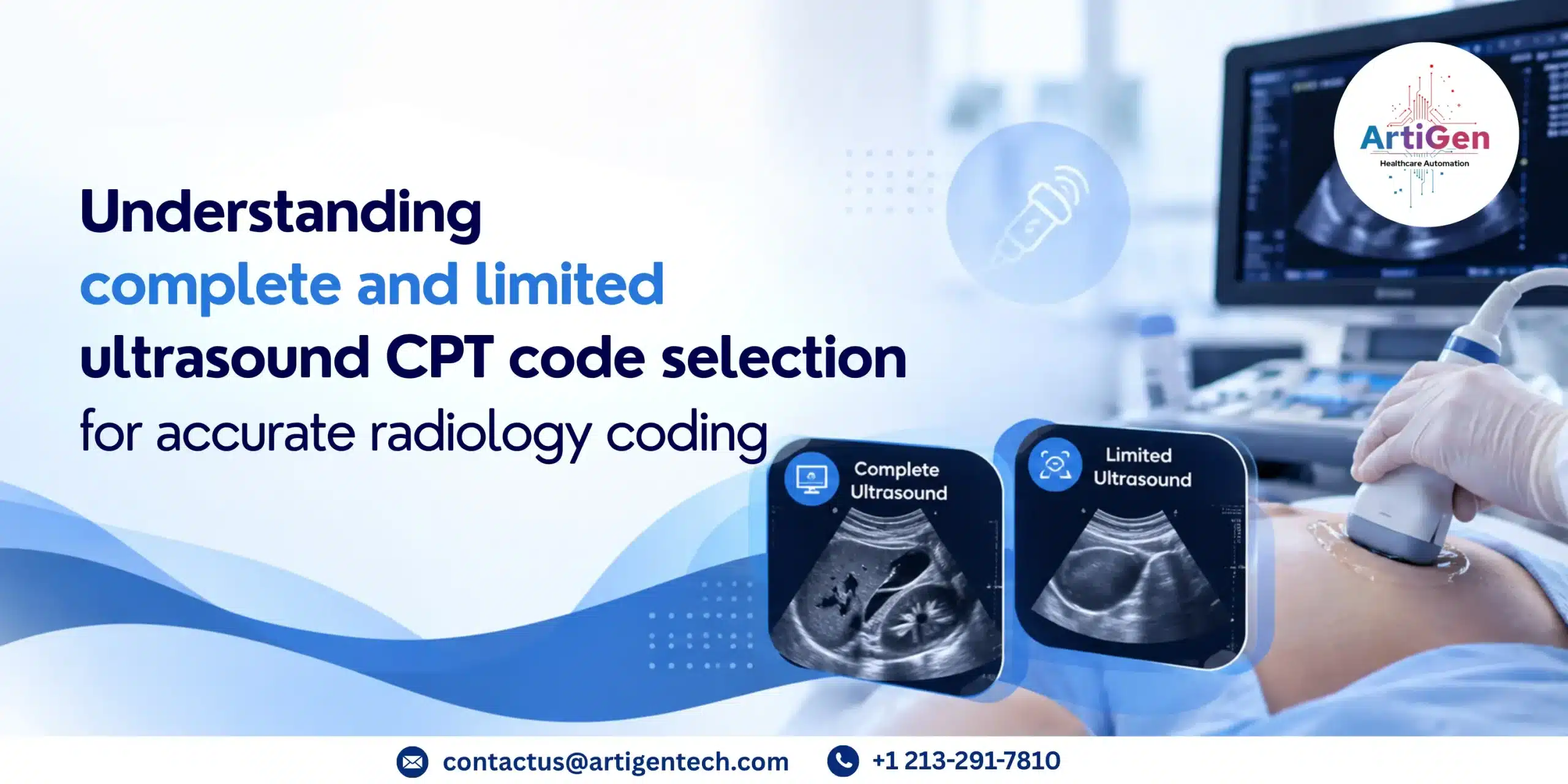
For ultrasound, the difference could be whether the study is complete or limited. Ultrasound CPT Codes 76700 and 76705 are great examples of why documentation must support the exact service. CMS and AAPC sources list 76700 as a complete abdominal ultrasound and 76705 as a limited abdominal study.
Why Imaging Technique Matters in Radiology Coding
Different imaging modalities are different clinical services. That is why radiology CPT Codes cannot be selected on diagnosis alone.
During diagnostic radiology coding, a coder might look over an MRI brain, CT chest, abdominal ultrasound, or multi-view X-ray. Each service is a different family of code and has its own reporting needs.
The distinction between radiology CPT Codes is especially important because a particular diagnosis can be evaluated by a number of imaging modalities. For instance, a pulmonary condition could be studied with X-ray, CT, or MRI, but the radiology CPT coding is determined by the service rendered.
This is where radiology coding guidelines and CPT coding guidelines become essential.
The Four Key Elements behind Radiology CPT Code Selection
1. Imaging Modality
Identifying the modality actually performed is the first step in imaging modality coding.
MRI CPT Codes are for services of magnetic resonance imaging. CT scan CPT Codes are Codes for computed tomography procedures. Diagnostic ultrasound services are described using ultrasound CPT Codes. Radiographic examinations are described using X-ray CPT Codes.
They are not interchangeable categories, although the clinical indication may be similar.
For radiology imaging coding, always verify the modality from the actual procedure documentation.
2. Anatomical Region
Once the technique is identified, coders figure out the specific anatomic area.
Radiology procedure Codes are often grouped by the body part that was imaged. So, knowing an MRI or CT was done is not enough for proper radiology CPT code selection.
The coder may need to distinguish between brain, chest, abdomen, pelvis, extremity, spine or other anatomical region.
One reason radiology coding documentation needs to be specific enough to determine exactly what was looked at.
3. Contrast and Protocol
Contrast may change the applicable procedure code. Some radiologic studies have separate Codes for without-contrast, with-contrast, and combined contrast protocols, according to CMS NCCI radiology guidance.
Therefore, the CPT coding guidelines need to be reviewed with the actual protocol.
When dealing with CT scan CPT Codes and MRI CPT Codes, coders should verify if contrast was used and what type of examination was documented.
The same documentation-first principle applies to radiology CPT Codes, CPT Codes for radiology, and overall radiology CPT code selection.
4. Extent of the Examination
The extent of the study is of particular importance for ultrasound.
Complete Vs limited ultrasound is not a matter of number of images obtained. Documentation should support the CPT Service definition.
For example, abdominal ultrasound CPT Codes have different reporting pathways for complete vs. limited exams. AAPC defines 76700 as complete abdominal ultrasound and 76705 as limited abdominal ultrasound.
This makes abdominal ultrasound coding, limited ultrasound coding and ultrasound medical coding highly documentation dependent.
Current Examples of Modality-Based Coding
Imaging technique | Example CPT Codes | Coding consideration |
Chest X-ray | 71045, 71046 | Number of views and examination type |
CT thorax | 71250, 71260, 71270 | Contrast protocol |
MRI chest | 71550, 71551 | Region and contrast |
Complete abdominal ultrasound | 76700 | Complete examination |
Limited abdominal ultrasound | 76705 | Limited/focused examination |
These are examples, not an exhaustive code list. CMS’s 2026 published code resources include these modality-specific services.
Coders should always verify the correct current code set and payer requirements for radiology billing and coding rather than work from an outdated code sheet.
Complete vs Limited Ultrasound: A Common Coding Decision
The decision of complete versus limited is one of the most common documentation problems with ultrasound CPT Codes.
A full examination typically requires the documented scope of the complete service, whereas a limited study is suitable when the service is focused or restricted as defined by the code.
When coding abdominal ultrasound, coders can see liver, gallbladder, spleen, pancreas, aorta, or kidney documentation. But, the presence of a number of organs in a report does not necessarily determine the code.
The coder must adhere to ultrasound billing guidelines, CPT coding guidelines, and the documented scope of the exam.
This supports accurate limited ultrasound coding, diagnostic radiology coding, ultrasound medical coding.
How Coders Connect Documentation to Radiology CPT Coding
A practical workflow is:
Order → Procedure performed → Modality → Anatomy → Protocol/contrast → Documentation → CPT validation → Claim
The order describes the clinical intent, but the procedure documentation reflects what was actually done.
That distinction is critical to radiology coding documentation. An abdominal ultrasound does not automatically justify reporting all abdominal ultrasound Codes.
Likewise, the order for MRI does not dictate which of the MRI CPT Codes is to be reported.
Before radiology CPT coding, radiology medical coding, radiology billing and coding, the coder has to confirm the service.
Radiology Coding Guidelines and Claim Accuracy
Accurate radiology CPT coding requires consistent application of radiology coding guidelines.
Coders also need to know the rules of the National Correct Coding Initiative. CMS has its own radiology policy chapter which covers services in the CPT 70000-79999 range. This chapter covers reporting relationships, principles of contrast, and services which may or may not be separately reported.
This matters because radiology procedure Codes are not selected in isolation.
A code may be technically correct but create a claim issue if documentation doesn’t support the service or another service is bundled per applicable rules.
This is why CPT coding guidelines, radiology coding guidelines and radiology coding documentation must work together.
How Automated Radiology Coding Supports High-Volume Imaging
A large imaging organization may process thousands of studies across multiple modalities every day.
Manually checking every report against CPT Codes for radiology can consume significant coder time.
With automated radiology coding, routine cases can be prioritized for standard validation while complex cases receive additional review.
A radiology coding software platform can also support radiology imaging coding by comparing procedure information with documentation.
This approach can improve radiology CPT code selection, reduce repetitive review, and support more consistent radiology billing and coding.
How RadioNEX AI Supports Radiology Coding
RadioNEX AI can be positioned as ArtigenTech’s radiology-focused AI solution, helping healthcare organizations streamline radiology medical coding, documentation review, and radiology CPT code selection across imaging modalities. It can support workflows involving MRI CPT Codes, CT scan CPT Codes, ultrasound CPT Codes, and X-ray CPT Codes, while helping coding teams identify documentation elements that require validation.
By combining radiology coding automation with professional coder review, RadioNEX AI can help organizations improve consistency across diagnostic radiology coding, radiology imaging coding, and radiology billing and coding workflows.
Explore RadioNEX AI for Radiology Coding → https://www.artigentech.com/products/radionex-ai/
A Real-World Example
Consider an outpatient imaging center that receives an order for an abdominal ultrasound because of right upper-quadrant pain.
The report documents a focused gallbladder examination rather than a complete abdominal examination.
The coder should not select the CPT code only because the order says “abdominal ultrasound.” The documented scope must be reviewed to determine whether the service meets the requirements for complete or limited reporting.
This is where abdominal ultrasound CPT Codes, complete vs limited ultrasound, ultrasound billing guidelines, and abdominal ultrasound coding come together.
The same principle applies across MRI CPT Codes, CT scan CPT Codes, and X-ray CPT Codes: code the service actually documented.
FAQs
What modality was performed?
This establishes the correct code family for imaging modality coding.
What anatomical region was examined?
This narrows the available radiology procedure Codes.
Was contrast used?
This may change the applicable radiology CPT Codes.
Was the examination complete or limited?
This is especially important for ultrasound CPT Codes and limited ultrasound coding.
Does the report support the selected service?
This confirms radiology coding documentation, radiology CPT code selection, and compliance with CPT coding guidelines.
Key Takeaways for Radiology Coding Teams
The connection between imaging technique and CPT selection is a documentation-driven process.
MRI CPT Codes must match the documented MRI service.
CT scan CPT Codes must reflect the documented CT technique and protocol.
X-ray CPT Codes must match the examination and applicable views.
Ultrasound CPT Codes must reflect the documented examination scope.
Radiology CPT Codes and CPT Codes for radiology should never be selected only from the diagnosis or physician order.
For diagnostic radiology coding, the most reliable approach combines radiology CPT coding, radiology medical coding, radiology billing and coding, and clear radiology coding documentation.
As imaging volumes increase, radiology coding automation and automated radiology coding can help organizations scale these workflows while maintaining professional coder oversight.
ArtigenTech’s AI-powered approach can support radiology coding software, radiology imaging coding, and intelligent validation workflows—helping healthcare organizations improve consistency across MRI CPT Codes, CT scan CPT Codes, ultrasound CPT Codes, and X-ray CPT Codes.
The core principle remains simple:
Identify the imaging technique. Confirm the anatomy. Validate the protocol. Read the documentation. Then select the CPT procedure.
That workflow is the foundation of accurate radiology CPT code selection, efficient radiology billing and coding, and reliable ultrasound medical coding.