FY 2027 ICD-10-CM Code Changes Affecting Radiology Coding
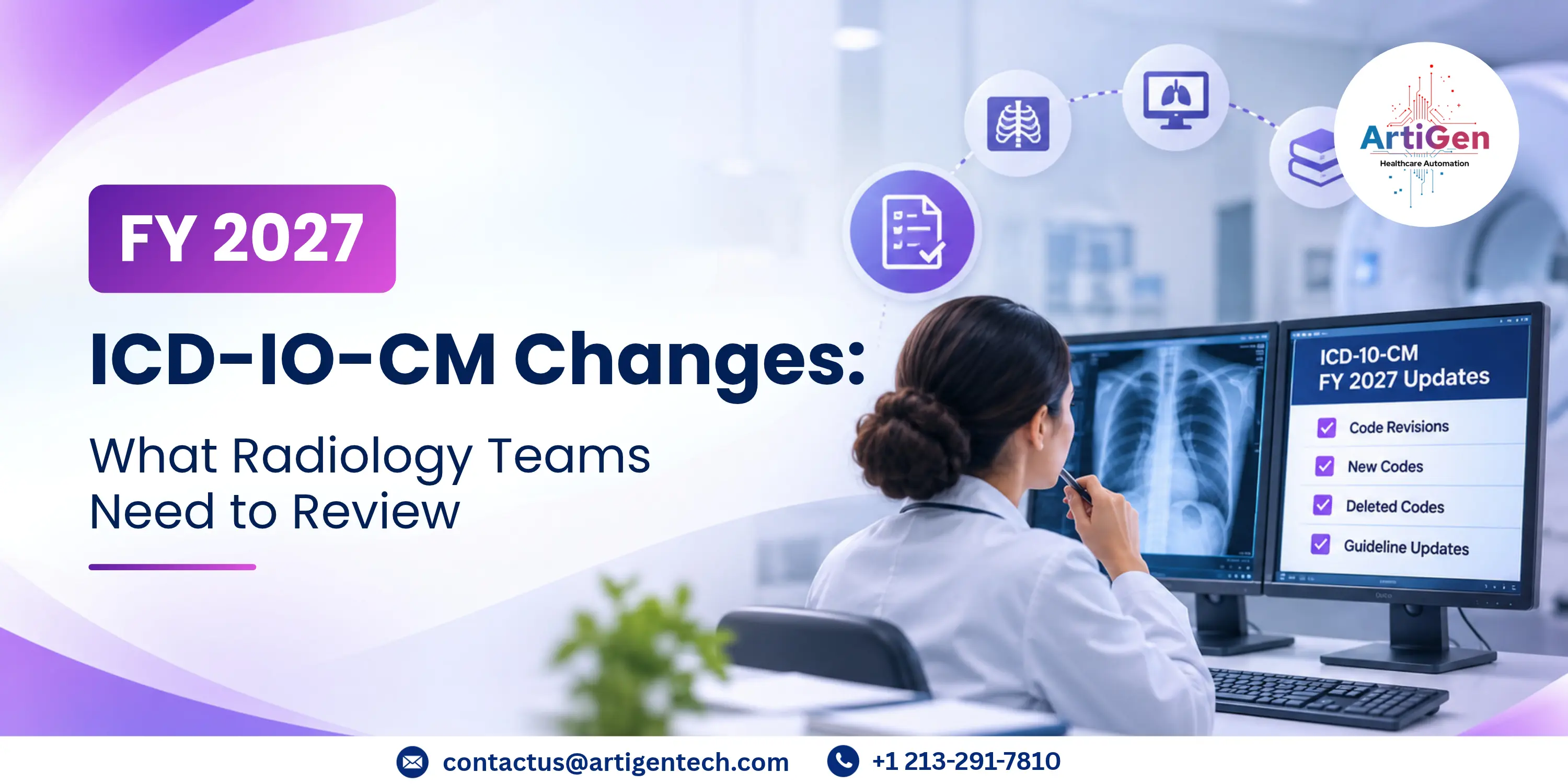
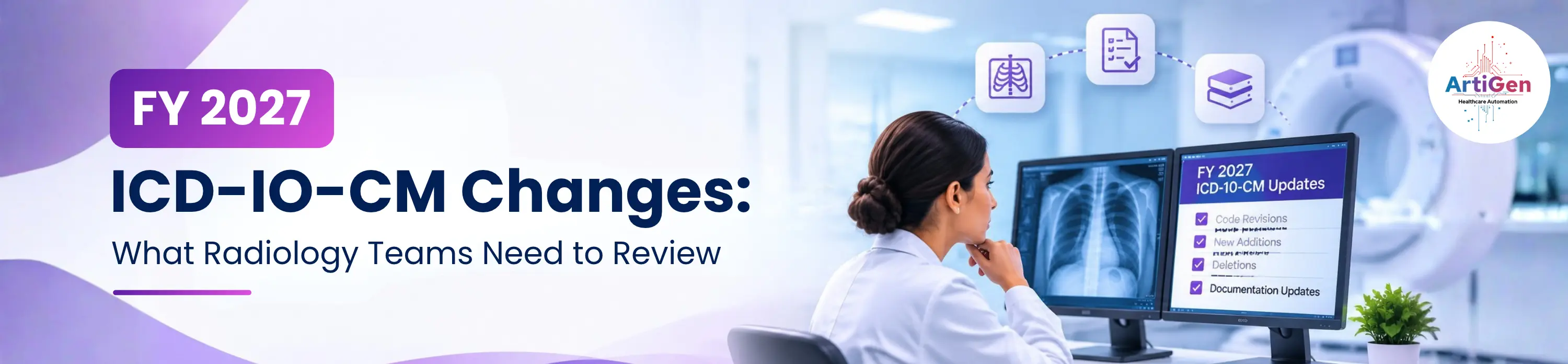
The FY 2027 ICD-10-CM update is now effective for patient encounters from October 1, 2026, through September 30, 2027. For radiology organizations, these ICD-10-CM code updates are not merely an annual code-list exercise. Changes in diagnosis specificity, documentation requirements and coding conventions can affect medical necessity, claim submission and reimbursement in the radiology realm. CMS issues the official ICD-10-CM guidelines, addendum, index, conversion table, and code tables for the FY 2027 coding year.
ICD-10 code updates and 2027 ICD-10 coding changes are part of the regular coding workflow and radiology teams should be reviewing the ICD-10 code changes. Updating coding references, checking documentation and updating radiology coding software can make medical coding accurate and reduce radiology claims denials due to avoidable issues.
Why FY 2027 ICD-10-CM Changes Matter for Radiology
Accurate diagnosis information is required to support medical necessity and to code radiology services. As new or revised diagnosis codes are added to ICD-10-CM 2027, radiology organizations must evaluate the possible effect of the changes on imaging orders, documentation, charge capture, and claims.
The FY 2027 ICD-10-CM update also emphasizes the necessity of integrating current medical coding guidelines, radiology coding guidelines, and ICD-10-CM coding guidelines into everyday radiology medical coding workflows.
Outdated diagnosis codes can lead to radiology coding errors, and incomplete documentation can make it difficult to establish medical necessity. These issues may affect radiology claim denial and rework going forward.
Key ICD-10 Code Updates for Radiology Teams
The FY 2027 ICD-10 code updates include new, revised, and deleted diagnosis codes. Radiology teams should review these ICD-10 code changes before they start using prior code references.
For example, the increased specificity of certain conditions may influence the documentation and reporting of an imaging diagnosis. Coders should refer to the ordering provider’s documentation for laterality, anatomical site, disease type, or any other specificity required for a condition prior to selecting the appropriate ICD-10-CM codes.
This review of 2027 ICD-10 coding changes is particularly important for organizations that process high volumes of CT Coding, MRI radiology coding, ultrasound, X-ray, and other diagnostic imaging services.
FY 2027 ICD-10-CM Codes Radiology Teams Should Review
A number of changes in FY 2027 impact imaging-related documentation and diagnosis reporting in particular. Instead of simply measuring the total number of codes, radiology teams should consider the individual codes that can affect medical necessity, specificity of diagnosis and validation of the claim.
Plantar Fasciitis and Foot Imaging
FY 2027 introduces greater specificity for plantar fasciitis. New codes include:
- M67.A01 – Plantar fasciitis, right foot
- M67.A02 – Plantar fasciitis, left foot
- M67.A09 – Plantar fasciitis, unspecified foot
Such laterality-specific update is important for radiology practices, as correct documentation of the affected side may be required for foot X-rays, MRI studies, ultrasound radiology studies, and other imaging services.
Coders should also be aware that the previous, more general M72.2 plantar fascial fibromatosis code is no longer reportable in its previous form and that FY 2027 provides more specific reporting options. You should review the current ICD-10-CM coding guidelines and the entire Tabular List before assigning a code.
Cardiomyopathy and Cardiac Imaging
FY 2027 expands cardiomyopathy coding with more specific diagnosis options, including:
- I42.00 – Dilated cardiomyopathy, unspecified
- I42.01 – Familial-genetic dilated cardiomyopathy
- I42.09 – Other dilated cardiomyopathy
- I42.81 – Arrhythmogenic cardiomyopathy
- I42.89 – Other cardiomyopathies not elsewhere classified
These changes may be relevant to cardiac imaging workflows, as the diagnosis recorded for echocardiography, cardiac CT, cardiac MRI, and related services may require more specificity.
Former I42.0 and I42.8 codes have been replaced with more specific FY 2027 codes. Radiology coding teams must therefore put a stop to the continued use of legacy code references in driving claim reporting.
New Cardiac Arrhythmia Codes
FY 2027 also adds more specific cardiac arrhythmia codes, including:
- I47.22 – Catecholaminergic polymorphic ventricular tachycardia (CPVT)
- I49.81 – Brugada syndrome
- I49.82 – Ventricular bigeminy
- I49.89 – Other specified cardiac arrhythmias not elsewhere classified
Accurate diagnosis documentation is essential for radiology organizations that offer cardiac imaging services, as it allows the association of the clinical indication with the imaging service. The previous I49.8 was split into more specific FY 2027 reporting options.
Odontogenic Sinusitis and Head and Neck Imaging
FY 2027 introduces new codes for odontogenic sinusitis, including:
- J34.830 – Odontogenic sinusitis, maxillary sinus
- J34.831 – Odontogenic sinusitis, ethmoid sinus
- J34.832 – Odontogenic sinusitis, frontal sinus
- J34.833 – Odontogenic sinusitis, sphenoid sinus
- J34.839 – Odontogenic sinusitis, unspecified
These codes may be especially relevant for head and neck imaging workflows that utilize CT or other imaging to evaluate sinus disease. Again, the importance of correlating clinical documentation with the correct ICD-10-CM codes is greater anatomical specificity.
New Secondary Malignancy Codes
FY 2027 adds more specific codes for secondary malignant neoplasms involving the head and neck:
- C78.31 – Secondary malignant neoplasm of larynx
- C78.32 – Secondary malignant neoplasm of pharynx
- C79.83 – Secondary malignant neoplasm of oral cavity
These updates may affect medical necessity and documentation of radiology for CT, MRI and other imaging procedures performed on oncology patients. Radiology teams should verify that the diagnosis reported on the claim corresponds to the documented condition and reason for the exam.
Deleted Codes Radiology Teams Should Remove From Workflows
FY 2027 also includes deleted codes. One example relevant to imaging is the sternoclavicular sprain family:
- S23.420 – Sprain of sternoclavicular joint/ligament
- S23.420A – Initial encounter
- S23.420D – Subsequent encounter
- S23.420S – Sequela
These codes should not continue to be used for applicable FY 2027 dates of service. Radiology coding workflows, templates, code libraries, and automated validation systems should be checked for legacy codes that are no longer valid.
Connecting ICD-10-CM Codes with Radiology CPT Codes
Simply choosing diagnosis codes is not enough to guaranty accurate radiology medical coding. Also the diagnosis has to be consistent with the service indicated by the appropriate radiology CPT codes.
For example, an imaging order may include a clinical concern, and the provider’s documentation may provide the diagnosis or indication for the study. The coder then verifies the correct ICD-10-CM codes and radiology CPT codes to ensure accurate claim reporting.
This is why current medical coding guidelines, radiology coding guidelines and ICD-10-CM coding guidelines are important for radiology billing and coding.
Coding errors in radiology and the potential for an increase in claim denials in radiology can result from a mismatch between the diagnosis represented by ICD-10-CM 2027 and the service represented by radiology CPT codes.
Documentation Is Central to Medical Coding Accuracy
One of the most important aspects of medical coding accuracy is complete clinical documentation. When assigning diagnosis codes, the FY 2027 ICD-10-CM coding guidelines emphasize the importance of thorough documentation and a thorough review of the entire record.
Documentation for radiology teams should support the clinical reasons for the examination and the specificity needed for appropriate ICD-10-CM codes.
Coders should review:
- Laterality
- Anatomical site
- Disease specificity
- Clinical indication
- Relevant provider documentation
- Imaging order information
- Applicable coding instructions
Following medical coding guidelines and ICD-10-CM coding guidelines helps reduce preventable radiology coding errors while improving medical coding accuracy.
Common Radiology Coding Errors After Code Updates
One of the biggest risks after annual ICD-10 code updates is the continued use of old information. Common radiology errors in coding can include picking deleted codes, not looking at relevant instructional notes, using incomplete documentation, or missing new specificity requirements.
Such radiology coding errors can affect radiology billing and coding and may result in radiology claims denials.
A well-planned review of the 2027 ICD-10 coding changes can help radiology organizations spot areas where their current workflows need to be updated. Radiology coding software can also help coders validate workflows and updated code references with access.
Moving Toward Medical Coding Automation
The annual code changes provide an opportunity to improve medical coding automation. Instead of just searching manually, organizations can implement automated medical coding workflows to search for relevant diagnosis information, flag potential inconsistencies and help in validating codes.
However, automated medical coding should be used as a complement to professional coding judgment, not a substitute. Medical coding automation is most effective when it allows coders to more consistently apply established medical coding guidelines, assess potential radiology coding errors and review documentation.
Modern radiology coding automation can also assist organizations to manage large volumes of imaging documentation while still ensuring a structured review process.
How Radiology AI Coding Can Support FY 2027 Updates
Radiology AI coding can assist coding teams requirements by assisting with code identification and reviewing documentation. Radiology AI coding along with the right radiology coding software can help compare clinical information with existing ICD-10-CM codes.
For instance, radiology AI coding can assist in finding a documentation that might need additional scrutiny before a diagnosis code is assigned. It can also facilitate broader radiology coding automation workflows.
The ultimate goal of radiology AI coding is to enhance the medical coding accuracy, assist coders, and minimize preventable radiology coding errors.
Building Better Radiology Coding Solutions
To have effective radiology coding solutions you need documentation review, coding expertise and technology. Updating a code database doesn’t cut it if the workflow in the vicinity still depends on obsolete templates.
Modern radiology coding solutions can help organizations with ICD-10-CM 2027 connectivity as well as radiology CPT codes, documentation and claim validation.
For organizations evaluating radiology coding solutions, important capabilities include:
- Current ICD-10-CM codes
- Updated ICD-10-CM coding guidelines
- Current radiology coding guidelines
- Documentation validation
- Radiology coding automation
- Radiology AI coding
- Claim-quality checks
- Support for medical coding accuracy
These capabilities can make radiology coding solutions more useful across both coding and billing workflows.
Supporting Radiology Teams With RadioNEX AI
ArtigenTech’s RadioNEX AI is designed to refine coding Specialty-specific technology can help coding teams streamline documentation and coding workflows as they deal with ICD-10 code updates, ICD-10-CM 2027, and evolving radiology coding guidelines that require constant attention.
RadioNEX AI is able to serve the broader goals of radiology AI coding, radiology coding automation and medical coding automation, without losing the focus on professional review in the process.
For radiology organizations looking for radiology coding solutions, radiology coding software, and improved medical coding accuracy, specialty-focused automation can provide another layer of workflow support.
Preparing for the FY 2027 Coding Cycle
Radiology organizations should view changes and updates to ICD-10 codes rather than a one-time annual task.
Constant focus on ICD-10 code updates, ICD-10-CM 2027 and changing radiology coding guidelines is needed and specialty-specific technology can help coding teams streamline documentation and coding workflows.
RadioNEX AI is able to serve the broader goals of radiology AI coding, radiology coding automation and medical coding automation, without losing the focus on professional review in the process.
Specialty-focused automation can provide another layer of workflow support for radiology organizations looking for radiology coding solutions, radiology coding software and improved medical coding accuracy.
Final Takeaway
Radiology organizations must stay up to date with coding knowledge and the FY 2027 update makes that crucial. Reviewing ICD-10-CM codes and ICD-10 code changes and 2027 ICD-10 coding changes can help teams identify outdated codes, new specificity requirements and documentation gaps before they impact claims.
Radiology Medical Coding, ICD-10-CM Coding Guidelines, Radiology Coding Guidelines and Medical Coding Guidelines With medical coding automation, organizations can improve medical coding accuracy and reduce radiology coding errors.
Coding teams transitioning to ICD-10-CM 2027 requirements can get help from technologies such as radiology coding software, radiology coding automation, automated medical coding and RadioNEX AI.
The goal is not simply to keep up with ICD-10 code updates. It is to create a radiology coding workflow that connects accurate documentation, appropriate radiology CPT codes, current diagnosis codes, and claim validation—helping organizations strengthen radiology billing and coding while reducing avoidable radiology claim denials.