Interventional Radiology Coding vs Diagnostic Radiology Coding: Key Differences
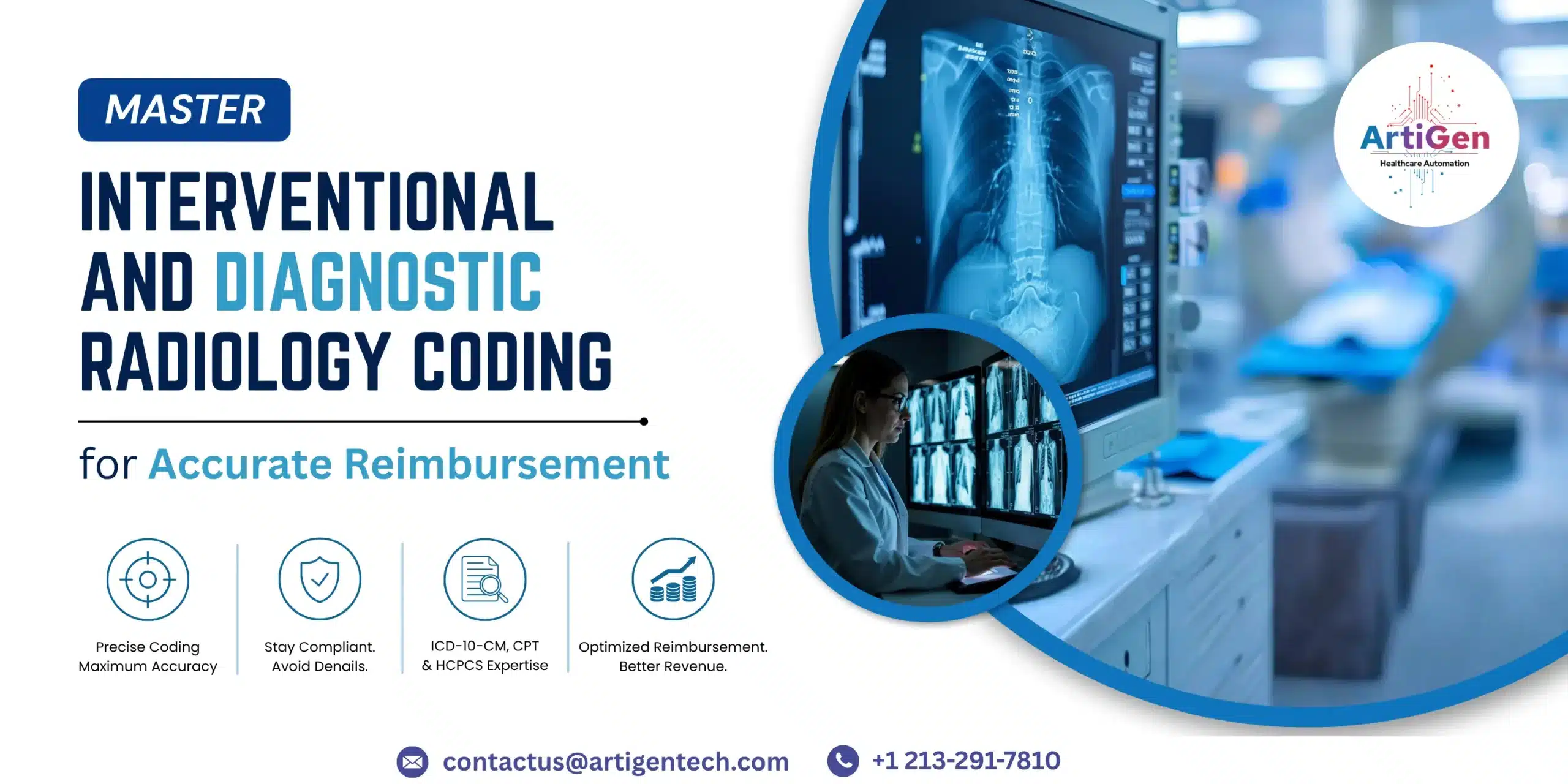
Radiology is one of the most documentation-heavy specialties in healthcare, and correct coding is a critical part of compliant reimbursement. With the advancement of imaging technology, healthcare providers are performing increasingly complex diagnostic and minimally invasive procedures. This evolution has made radiology medical coding more difficult, as coders must understand not only imaging studies, but also procedure-specific documentation, coding rules and payer requirements.
Some of the most commonly misidentified specialties include diagnostic radiology coding and interventional radiology coding. While both require imaging, they differ widely in documentation requirements, coding methodology, CPT code selection, and billing practices. Not following the right CPT coding guidelines or missing the procedure details can lead to coding errors, claim rejections, regulatory risks, and delayed payments.
Healthcare organizations must also ensure that they have complete medical coding documentation, correct ICD-10 coding for radiology and radiology coding guidelines and interventional radiology coding guidelines. With coding complexity on the rise, many organizations are looking to radiology coding automation solutions to enhance coding accuracy and streamline revenue cycle operations.
In this article, we will explore the key differences between interventional radiology coding and diagnostic radiology coding, typical coding challenges, documentation requirements, and how AI-powered automation is transforming radiology coding workflows.
Understanding Diagnostic Radiology Coding
Diagnostic radiology coding focuses on assigning codes for imaging procedures used to identify, track, or assess a patient’s health. These procedures provide diagnostic information only and do not involve therapeutic intervention.
Common diagnostic imaging procedures include:
- X-rays
- Computed Tomography (CT)
- Magnetic Resonance Imaging (MRI)
- Ultrasound
- Mammography
- Nuclear Medicine
- Bone Density Studies
Coders assign appropriate diagnostic radiology CPT codes based on:
- Imaging modality
- Anatomical site
- Contrast administration
- Number of imaging views
- Limited or complete study
- Findings & Technique performed
- Physician interpretation
Accurate diagnostic radiology billing requires complete physician documentation and adherence to latest updates from AMA radiology coding guidelines.
What Is Interventional Radiology Coding?
Interventional radiology coding stands out from diagnostic imaging, because it involves image-guided minimally invasive procedures used to diagnose and treat medical conditions.
An interventional radiology procedure combines advanced imaging with therapeutic intervention allowing physicians to perform procedures using catheters, guidewires, needles, balloons or stents instead of traditional surgery.
Common examples include:
- Angiography
- Angioplasty
- Embolization
- Thrombectomy
- Biopsy
- Drainage catheter placement
- Central venous catheter insertion
- Image-guided tumor ablation
Because multiple procedural components are often performed during a single encounter, selecting the correct interventional radiology CPT codes requires detailed documentation review and strict adherence to interventional radiology coding guidelines.
Diagnostic vs Interventional Radiology Coding
Although both specialties use imaging technology, their coding workflows are fundamentally different.
Diagnostic Radiology Coding | Interventional Radiology Coding |
Diagnostic imaging only | Image-guided diagnosis and treatment |
Focuses on image acquisition and interpretation | Includes therapeutic procedures |
Uses diagnostic radiology CPT codes | Uses complex interventional radiology CPT codes |
Lower documentation complexity | Extensive procedural documentation required |
Minimal modifier usage | Frequent modifier application |
Straightforward reimbursement | Complex interventional radiology billing requirements |
Example: Chest, single view 71045. Acute Cough R05.1 | Biopsy of liver, percutaneous 47000,76942(ultrasonic guidance for needle placement) |
Understanding these differences is essential for improving coding accuracy and maintaining radiology coding compliance.
Documentation Requirements: Why They Matter
Successful radiology billing and coding is built on complete clinical documentation. For the coders to accurately assign CPT and ICD-10 codes, the physician documentation should clearly describe the service performed.
For diagnostic radiology coding, documentation should include:
- Clinical indication
- Imaging modality
- Anatomical location
- Contrast administration (if applicable)
- Number of views
- Limited or complete study
- Radiologist interpretation
- Final impression
For an interventional radiology procedure, documentation is significantly more detailed and should include:
- Procedure indication
- Vascular access site
- Catheter pathway
- Imaging guidance used
- Therapeutic intervention performed
- Devices implanted
- Contrast details
- Procedure completion
- Complications (if any)
- Physician findings
Accurate medical coding documentation helps coders assign compliant interventional radiology CPT codes, implement the proper diagnosis via ICD-10 coding for radiology and support proper reimbursement.
Coding Complexity: Why Interventional Radiology Is More Challenging
One of the primary differences between diagnostic radiology coding and interventional radiology coding is the level of coding complexity.
Generally, diagnostic imaging involves reporting a single CPT code for the imaging study performed. By contrast, an interventional radiology procedure may have multiple billable components performed in one session.
Coders must evaluate:
- Catheter placement
- Selective vascular access
- Imaging supervision and interpretation
- Therapeutic intervention
- Device deployment
- Additional imaging performed
- Modifier requirements
- Bundling and unbundling rules (NCCI Edits)
Failure to follow current radiology CPT coding guidelines or interventional radiology coding guidelines can lead to under-coding, over-coding or payer denials.
Common Coding Challenges in Radiology
Healthcare organizations frequently encounter coding issues that impact reimbursement and compliance.
Some of the most common challenges include:
Incomplete Documentation
Missing procedural details limit accurate code assignment and increase coding queries.
Incorrect CPT Code Selection
Selecting incorrect diagnostic radiology CPT codes or interventional radiology CPT codes leads to coding inaccuracies and reimbursement delays.
ICD-10 Diagnosis Mismatch
Improper ICD-10 coding for radiology may fail to support medical necessity, increasing denial risk.
Billing Errors
Inaccurate diagnostic radiology billing and interventional radiology billing can result from incorrect modifier usage, duplicate billing, or failure to follow payer-specific rules.
Compliance Risks
Failure to comply with radiology coding guidelines, interventional radiology coding guidelines, and CPT coding guidelines increases audit exposure and affects overall radiology coding compliance.
Why Radiology Coding Audits Are Essential
Routine radiology coding audit activities help healthcare organizations identify documentation deficiencies, coding inconsistencies and reimbursement risks prior to claims submission.
An effective radiology coding audit evaluates:
- Documentation-to-code accuracy
- ICD-10 diagnosis validation & specificity
- Modifier usage
- Medical necessity
- Compliance with payer rules(NCDs and LCDs)
- Procedure alignment & Imaging technique details
- Denial Tracking
Regular audits enhance coding quality, strengthen compliance, and reduce avoidable claim denials.
How AI Is Transforming Radiology Coding Automation
As radiology services grow more complex, manual coding alone is no longer sufficient to manage the high volume of imaging studies and complex procedures. Radiology coding automation is increasingly being adopted by healthcare organizations to improve coding quality, reduce turnaround time, and improve compliance.
AI-driven coding platforms leverage Natural Language Processing (NLP), Machine Learning (ML), clinical intelligence and Optical Character Recognition (OCR) to analyze physician documentation, identify procedures and suggest correct codes.
An intelligent radiology coding automation solution can:
- Automate the extraction of clinical information
- Review medical coding documentation in real time
- Recommend accurate diagnostic radiology CPT codes and interventional radiology CPT codes
- Validate ICD-10 coding for radiology
- Detect documentation gaps before claim submission
- Identify coding inconsistencies during a radiology coding audit
- Support radiology coding compliance by applying current payer and regulatory requirements
AI is a decision support tool that boosts productivity rather than replacing coders, allowing coding professionals to focus on complex clinical scenarios.
AI Workflow for Radiology Medical Coding
Modern AI platforms simplify both diagnostic radiology coding and interventional radiology coding by standardizing coding workflows.
AI-Powered Radiology Coding Workflow
Physician Documentation
↓
AI Clinical Documentation Review
↓
Procedure Identification
↓
ICD-10 Diagnosis Validation
↓
CPT Code Recommendation
↓
Modifier & Compliance Validation
↓
Radiology Coding Audit
↓
Claim Submission
This workflow helps to reduce manual review and ensure compliance with radiology coding guidelines and interventional radiology coding guidelines.
Best Practices for Accurate Radiology Coding
Healthcare organizations can improve coding accuracy by implementing standardized coding practices across diagnostic and interventional services.
Follow Current CPT Coding Guidelines for Radiology
Coders must keep up to date with the annual radiology CPT coding guidelines to report imaging procedures, modifier usage, and bundled services correctly.
Improve Medical Coding Documentation
To assign codes accurately, complete medical coding documentation is required. Documentation such as clinical indication, procedure performed, physician interpretation and final diagnosis should be included with each imaging event.
Perform Routine Coding Audits
A routine radiology coding audit finds documentation deficiencies, coding inconsistencies and reimbursement risks before claim submission.
Standardize Radiology Coding Documentation
Standardized radiology coding documentation extracts key clinical information, diagnosis, procedures, modifiers, laterality and encourages compliant coding, reduces provider queries and improves overall coding quality.
Adopt Radiology Coding Automation
Implementing radiology coding automation into the coding workflow can improve coding consistency, deliver consistently, improve financial outcomes, reduce manual effort, and accelerate reimbursement.
How ArtigenTech Simplifies Radiology Coding
ArtigenTech uses Artificial Intelligence, NLP and OCR in automation to change radiology medical coding for healthcare providers, hospitals and medical billing organizations.
Our AI-powered platform supports both diagnostic radiology coding and interventional radiology coding by:
- Automating review of medical coding documentation
- Recommending accurate interventional radiology CPT codes and diagnostic radiology CPT codes
- Supporting compliant ICD-10 coding for radiology
- Identifying documentation gaps before coding
- Performing intelligent radiology coding audit checks
- Improving radiology coding compliance
- Streamlining interventional radiology billing and diagnostic radiology billing
- Reducing coding turnaround time and claim denials
With intelligent radiology coding automation, coding teams can increase their accuracy and still keep up with constantly changing payer needs.
Key Takeaways
- Diagnostic radiology coding and interventional radiology coding follow different coding methodologies and documentation requirements.
- Accurate radiology billing and coding depends on complete physician documentation and adherence to radiology coding guidelines.
- Proper use of diagnostic radiology CPT codes, interventional radiology CPT codes, and ICD-10 coding for radiology reduces claim denials and improves reimbursement.
- Routine radiology coding audits help strengthen coding quality and ensure radiology coding compliance.
- AI-driven radiology coding automation improves coding accuracy, supports compliance, and reduces manual workload.
- ArtigenTech empowers healthcare organizations with intelligent automation that enhances coding productivity, simplifies billing workflows, and delivers more accurate reimbursement outcomes.
Conclusion
As radiology services change, understanding the gap between diagnostic radiology coding and interventional radiology coding is critical for accurate reimbursement and regulatory compliance. Although diagnostic imaging usually focuses on the interpretation of imaging studies, interventional procedures often require more detailed documentation, careful selection of the CPT code, and adherence to specialized coding rules.
Standardized radiology coding documentation, regular radiology coding audits, and AI-powered radiology coding automation can help healthcare organizations improve coding accuracy, reduce claim denials, and streamline both interventional radiology billing and diagnostic radiology billing.
ArtigenTech’s AI-powered radiology coding platform enables coding teams to confidently manage complex imaging encounters, automate compliance checks and deliver faster, more accurate coding across the radiology revenue cycle.
Frequently Asked Questions
What is the difference between diagnostic and interventional radiology coding?
Diagnostic radiology coding focuses on imaging studies(X-rays or MRIs) while interventional radiology coding involves minimally invasive, image-guided therapeutic procedures(stent placement or biopsies) that require surgical codes with imaging guidance as additional code.
Why is interventional radiology coding more complex?
An interventional radiology procedure may include vascular catheter placement, imaging guidance, therapeutic intervention, device deployment, and modifier application. These multiple components make coding significantly more complex than diagnostic imaging.
Why is medical coding documentation important in radiology?
Complete medical coding documentation supports accurate CPT and ICD-10 code assignment, demonstrates medical necessity, and improves reimbursement while reducing compliance risks.